

Introduction:
In a significant step toward the implementation of Alabama’s medical cannabis program, the Alabama Medical Cannabis Commission has awarded licenses to 21 companies. This groundbreaking development marks a significant milestone in the state’s efforts to provide access to medical cannabis for eligible patients. The diverse array of licensed companies is expected to contribute to the availability and variety of medical cannabis products throughout Alabama.
After years of intense debate and discussions surrounding the potential benefits of medical marijuana, the decision to grant licenses reflects a shift in Alabama’s perspective on cannabis. The state now recognizes the therapeutic properties of marijuana and the importance of offering accessible treatment options to those in need. With these licenses, the 21 chosen companies will have the opportunity to cultivate, process, and distribute medical cannabis products, ensuring that patients can legally and safely access the medicine they require.
This landmark decision brings hope to countless individuals who have been eagerly awaiting the legalization of medical marijuana in Alabama. It opens up new possibilities for improved healthcare and enhanced quality of life for patients suffering from chronic pain, epilepsy, and other debilitating conditions. By joining other states that have embraced the potential benefits of cannabis, Alabama takes a significant step forward in providing comprehensive medical marijuana programs for its citizens. The licensed companies will play a crucial role in meeting the growing demand for medical cannabis and ensuring that patients receive the care they need.
The following is a breakdown of the licensed companies organized by category:
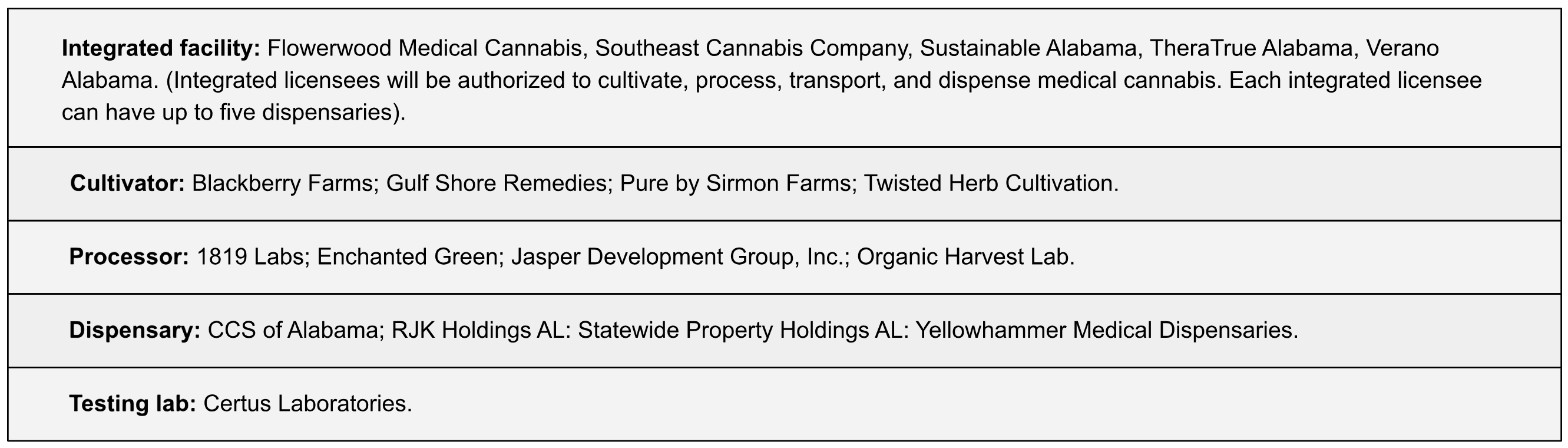
The Licensing Process:
Following a meticulous evaluation process, the Alabama Medical Cannabis Commission granted licenses to 21 companies, selected from a pool of applicants. The commission carefully assessed each applicant’s qualifications, including their ability to meet stringent regulatory requirements and adhere to the state’s guidelines for the safe production and distribution of medical cannabis.
Diverse Range of Companies:
The 21 selected companies represent a diverse range of expertise within the medical cannabis industry. Among the licensed entities are cultivators, processors, dispensaries, and integrated vertically-oriented companies that handle multiple aspects of the supply chain. This approach ensures a robust and competitive market, fostering innovation and quality in the medical cannabis industry.
Impact on Patients:
The awarding of licenses to these companies paves the way for patients in Alabama to access medical cannabis products for the treatment of qualifying medical conditions. The increased availability of licensed dispensaries across the state will allow eligible patients to obtain safe and regulated cannabis-based treatments. This marks a significant advancement in the healthcare options available to those suffering from conditions such as chronic pain, epilepsy, multiple sclerosis, and other debilitating ailments.
Economic Opportunities:
The establishment of a regulated medical cannabis industry in Alabama brings forth a host of economic opportunities for the state. With the issuance of licenses, these 21 companies will create new jobs in cultivation, processing, retail, and related sectors, contributing to the overall growth of the state’s economy. Additionally, the medical cannabis program is expected to generate tax revenue, which can be utilized for various public initiatives and healthcare programs.
Regulatory Framework and Oversight:
The Alabama Medical Cannabis Commission will continue to play a vital role in overseeing the licensed companies and ensuring compliance with the state’s regulatory framework. Stringent quality control measures and regular inspections will be enforced to guarantee the safety and efficacy of medical cannabis products. The commission’s commitment to robust oversight aims to protect patients and maintain the integrity of the program.
Future Developments:
With the licenses awarded and the regulatory framework in place, Alabama’s medical cannabis program is poised for further growth and development. Ongoing research, collaboration, and feedback from patients, healthcare professionals, and industry stakeholders will contribute to the program’s evolution and refinement over time. As the industry matures, it is anticipated that additional companies will enter the market, diversifying product offerings and enhancing accessibility for patients.
Conclusion:
The Alabama Medical Cannabis Commission’s issuance of licenses to 21 companies represents a significant milestone in the establishment of a regulated medical cannabis industry in the state. This development opens doors for patients to access safe and regulated medical cannabis treatments for qualifying conditions. Furthermore, it creates economic opportunities and tax revenue for Alabama while ensuring the program’s integrity through robust oversight. With the foundation laid, Alabama’s medical cannabis program is set to expand, benefiting patients and the state’s economy alike.
EXPLORE MORE NEWS




Newsletter