
New Frontier Data recently unveiled the first part of their report titled “Cannabis Consumers in America 2023: An Overview of Consumers Today.” This comprehensive study delves into the preferences, behaviors, and beliefs of over 4,300 adult cannabis consumers, as well as the perspectives of more than 1,100 non-consumers regarding potential cannabis use and their opinions about the plant.

Among the survey’s findings, one aspect that stood out was the enduring importance of cannabis as a medical remedy. This significance extends not only to current consumers who rely on cannabis for improved well-being, but also to its role in legitimizing the plant among those who do not consume it.
The survey revealed that 42% of adults in the United States have either used cannabis or are likely to use it in the future. Furthermore, 37% of U.S. adults fall into the category of “current consumers,” indicating that they use cannabis at least once a year and plan to continue doing so.

Interestingly, there has been a slight increase in the percentage of U.S. adults who identify as cannabis consumers compared to last year. Concurrently, the proportion of adults who claim they will never consume cannabis has slightly decreased from 34% to 30%. These findings suggest a gradual shift in societal attitudes towards cannabis, possibly driven by reduced stigma and broader legal accessibility.
Cannabis consumers’ openness about their use—and their success in managing medical conditions with cannabis—has affected the broader narrative about the drug.

The openness displayed by cannabis consumers regarding their use and the positive impact of cannabis in managing various medical conditions have influenced the overall perception of the drug. Notably, the majority of current consumers, approximately 70%, perceive their cannabis use as having at least some medical purpose. Among them, 15% exclusively use cannabis for medical reasons, 28% primarily for medical purposes, and 25% primarily for recreational enjoyment, with some medical benefits as well.
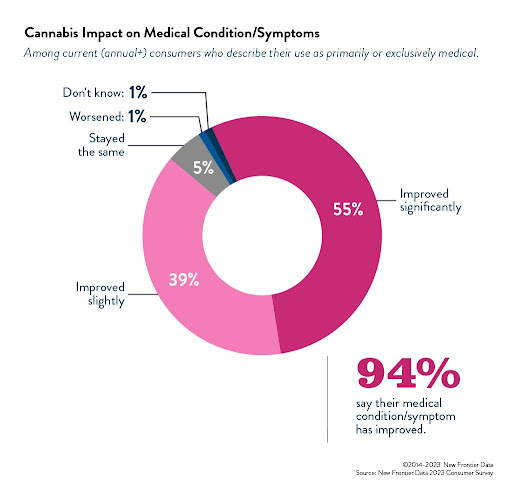
Remarkably, 94% of self-identified medical consumers reported that using cannabis has had a positive effect on their medical conditions or symptoms. Over half of them, 55%, experienced significant improvements in their well-being.
While cannabis patients have long appreciated these medical benefits, the recent shift in societal acceptance has allowed consumers to openly discuss their cannabis use with friends, family, and even coworkers. Surprisingly, 48% of consumers stated that their colleagues were aware of their cannabis consumption.
As cannabis becomes destigmatized, individuals are increasingly sharing their positive medical experiences with their social circles. This personalized counternarrative challenges the prohibitionist messaging based on propaganda prevalent during the past few decades.
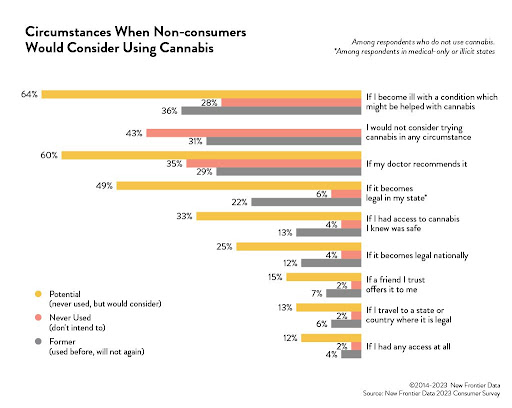
Non-consumers, on the other hand, find medical reasons to be the most persuasive when considering cannabis use. Exposure to the positive experiences of loved ones using medical cannabis, coupled with the widespread legalization of cannabis for medical purposes in numerous states, has contributed to the plant’s legitimacy as medicine in the eyes of non-consumers. Many non-consumers would be open to trying cannabis if they were suffering from a medical condition that could potentially benefit from it or if it were recommended by a healthcare professional.
While the legal cannabis industry predominantly focuses on the adult-use market, it is crucial to keep medical cannabis at the forefront. Medical cannabis offers relief to millions of consumers who have had limited success with alternative remedies. Additionally, medical cannabis garners compassion and support from non-consumers who recognize its value in promoting health and well-being.
Source: New Frontier Data
EXPLORE MORE NEWS



Newsletter