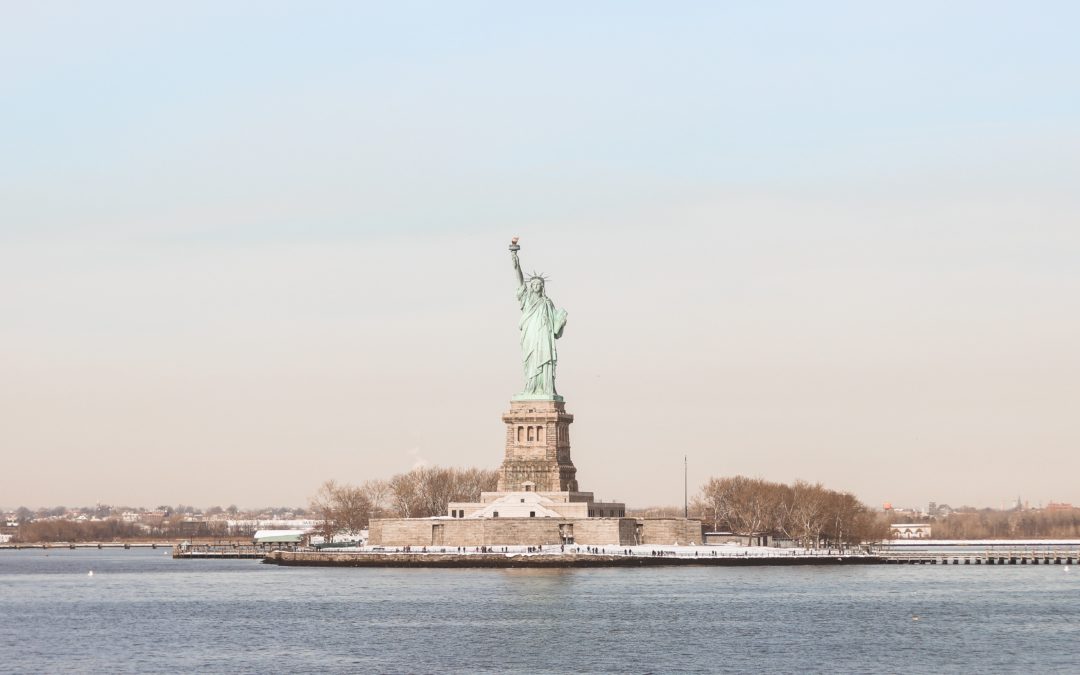
New York has initiated a major expansion of its legal cannabis industry by opening applications for hundreds of new marijuana business licenses. This move follows a slow start, with only about two dozen retailers operating since adult-use sales began last December. The application period will run until December 4, and licenses are expected to be awarded early next year.
Governor Kathy Hochul announced this new application period while emphasizing her administration’s commitment to combating unlicensed marijuana businesses that have proliferated due to delays in the state’s legal rollout. The goal is to accelerate New York’s shift from the underground cannabis market to regulated retailers.
Governor Hochul anticipates a large number of license applicants, aiming for over 1,000 legal cannabis shops within the next year. Simultaneously, the Department of Small Business Services in New York City has launched an educational program for cannabis entrepreneurs, offering training and advice from industry leaders through the “FastTrac” program, with applications open until October 18.
Governor Hochul estimated that over 2,000 illegal marijuana stores currently operate in the state, with a significant concentration in New York City. Legal challenges and a slow regulatory process have contributed to this proliferation. However, the governor expressed optimism about overcoming these challenges and achieving a smoother process by the end of the year.
In addition to expanding licenses, New York is intensifying law enforcement efforts against illegal cannabis sellers. Governor Hochul and State Attorney General Letitia James stressed the importance of supporting small businesses and rectifying the harms caused by the “war on drugs.”
Regulatory authorities and lawmakers are actively seeking input to address challenges in the legal cannabis industry, with a focus on social equity and small business opportunities. While there have been some controversial regulatory changes, efforts are underway to expedite consumer access to legal cannabis and provide alternative markets for surplus products from growers.
New York’s efforts to expand its legal cannabis industry and combat the illegal market are progressing. The state aims to transition to a well-regulated industry while prioritizing social equity and small businesses. Challenges remain, and ongoing regulatory adjustments and public input will shape the future of New York’s cannabis industry.
As cannabis legalization continues to spread across the country, major corporations are increasingly taking notice and investing in the industry. In April of 2023, a major beverage company announced a $100 million investment in a cannabis-infused drink startup, signaling the growing trend of large corporations entering the cannabis space.
Georgia’s regulatory authorities have taken a significant step towards improving access to medical cannabis treatment for patients in the state. The state Board of Pharmacy has recently introduced a set of regulations that will allow independent pharmacies in Georgia to dispense cannabis oil to eligible patients enrolled in the state Department of Public Health’s registry, as reported by Northwest Georgia News.
Market research is an essential tool for gauging the potential of a brand in any new marketplace. Few brands in the cannabis industry have the wherewithal to conduct market research on emerging products, some due to experience, some due to the availability / access to reach consumers, others may not see its utility in their launch plan.
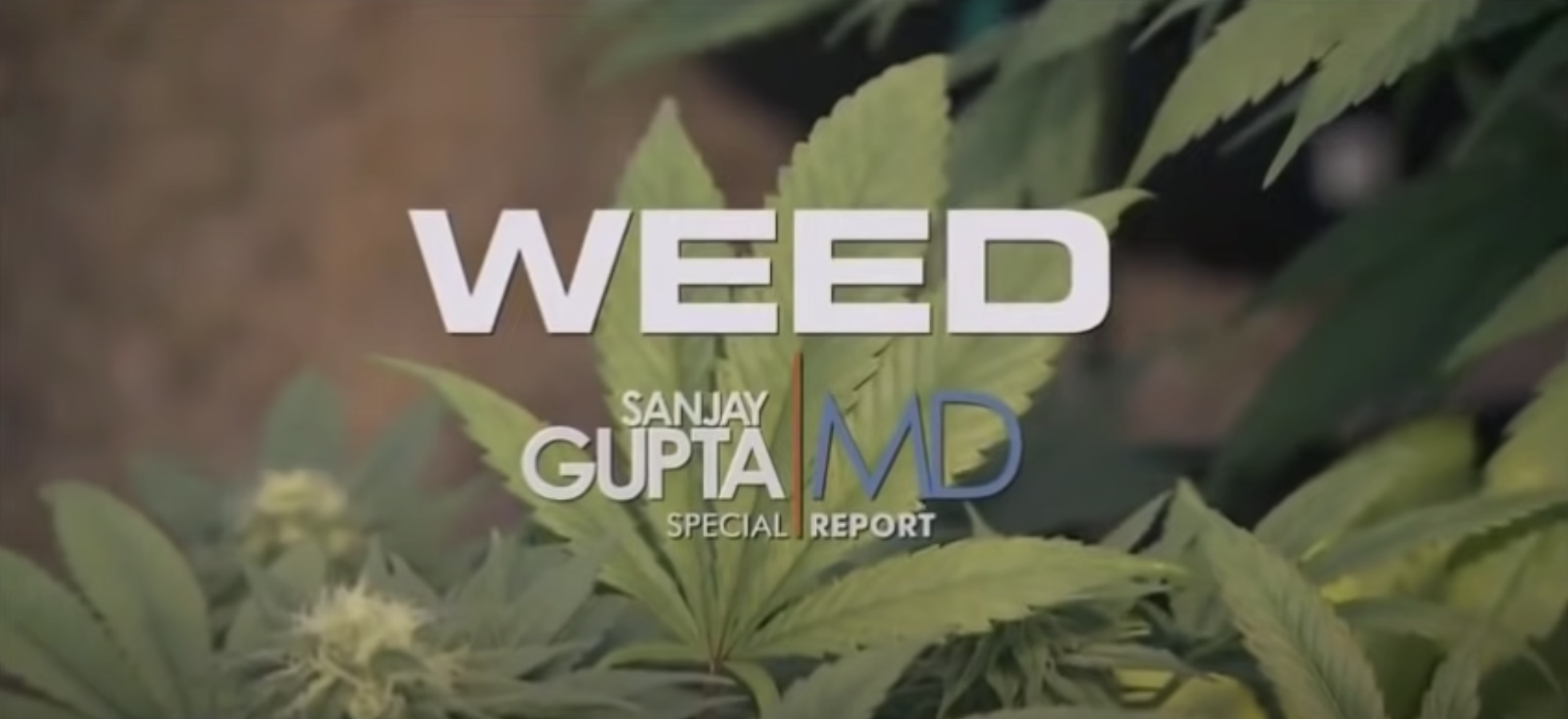
Step into a realm where the vibrant green leaves of a plant hold not just the promise of transformation, but a catalyst for societal change. In the backdrop of a world skeptical yet curious, “Weed,” the mesmerizing series guided by the esteemed Dr. Sanjay Gupta, unfolds its narrative. Beyond its captivating storytelling lies a landmark endeavor that challenged perceptions, stirred conversations, and sparked a revolution in the realm of medical science. With a masterful blend of painstaking research, heartrending narratives, and insights from the brightest minds, this seven-episode odyssey embarks on an unprecedented exploration of medical cannabis. As the series aired, it ignited fervent discussions, captivating both public and critical acclaim. “Weed” was more than a documentary; it was a beacon that illuminated the potential to rewrite medical paradigms and the ways in which cannabis could be harnessed for healing. Its impact rippled through society, reshaping attitudes and inspiring advancements in cannabis research, legislation, and compassionate patient care.
Newsletter
yes cannabis news
Stay in touch! YES Cannabis provides innovative solutions and strategies that create sustainable and enduring value for the companies we create, invest, and operate. By subscribing to our newsletter, you'll be the first to know about new developments in the industry and gain valuable insights to help you navigate this rapidly evolving space. Don't miss out on this opportunity to stay informed and connected – sign up today!
On May 30, 2023 Minnesota Gov. Tim Walz signed an expansive cannabis legalization bill into law, allowing the recreational use of cannabis for adults 21 and older starting Aug. 1. The Legislature passed the bill with a handful of Republicans joining a nearly united Democratic vote in favor. Although the bill has passed, dispensaries can’t open until the state figures out a licensing system for the businesses, so they won’t open for at least another year — some estimate in early 2025. This article aims to provide a detailed guide on how to open a cannabis dispensary in Minnesota. We will explore the current cannabis market and outlook, license types, scoring criteria, application fees, and the importance of seeking professional assistance from cannabis consultants like Global Go.
Minnesota Cannabis Market and Outlook
With a population of 5,717,184 as of the 2022 US Census, Minnesota ranks as the 22nd largest state in terms of population. The state’s medical cannabis program already boasts 40,345 registered patients as of Q1 2023. It is worth noting that local governments cannot prohibit the operation of cannabis businesses, although they may impose “reasonable restrictions” such as limited operating hours and proximity limitations near schools and parks. Furthermore, Minnesota has one of the lowest cannabis tax rates in the nation. The absence of adult-use cannabis programs in the states bordering Minnesota makes it an attractive and strategic market for cannabis entrepreneurs.
Minnesota Cannabis License Types
Minnesota offers various license types for cannabis businesses. However, vertical integration is prohibited except for microbusiness, mezzobusiness, lower-potency hemp edible manufacturers, and lower-potency hemp edible retailer licenses. The available license types include:
Cannabis Cultivator
Cannabis Delivery Service
Cannabis Event Organizer
Cannabis Manufacturer
Cannabis Mezzobusiness
Cannabis Microbusiness
Cannabis Retailer
Cannabis Testing Facility
Cannabis Transporter
Cannabis Wholesaler
Lower-Potency Hemp Edible Manufacturer
Lower-Potency Hemp Edible Retailer
Medical Cannabis Cultivator
Medical Cannabis Processor
Medical Cannabis Retailer
Minnesota Cannabis License Scoring Criteria
The Office of Cannabis Management (OCM) utilizes a merit-based scoring process to issue licenses. The scoring criteria encompass the following categories:
Social Equity applicant
Status as a Veteran
Security and record keeping
Employee training plan
Business plan and financial situation
Labor and employment practices
Knowledge and experience
Environmental plan
The OCM publicly discloses the number of points allocated to each category. Social Equity applicants are guaranteed at least 20% of the total available points. The total number of licenses awarded is determined based on “market stability.” To stay updated on any changes, it is advisable to follow Global Go’s licensing and regulatory updates on social media and their website.
Recreational Cannabis License Application Fees
The application fees for different license types are as follows:
License Type
Application Fee
Initial License Fee
Renewal License Fee
Microbusiness
$500
None
$2,000
Mezzobusiness
$5,000
$5,000
$10,000
Cultivator
$10,000
$20,000
$30,000
Manufacturer
$10,000
$10,000
$20,000
Retailer
$2,500
$2,500
$5,000
Wholesaler
$5,000
$5,000
$10,000
Transporter
$250
$500
$1,000
Testing Facility
$10,000
$10,000
$20,000
Event Organizer
$750
$750
None
Delivery Service
$250
$500
$1,000
Minnesota Cannabis Consultants and Planning
The OCM will release more information about the application process and important dates in the future. It is anticipated that the application window will open around May 2024, with sales expected to commence in the first quarter of 2025. To stay informed about Minnesota’s cannabis application timeline, it is crucial to follow updates from Global Go.
Even though Minnesota will not award new cannabis licenses until 2024, it is highly recommended to start gathering the necessary materials for the application process at least one year in advance. Global Go, a reputable cannabis consulting firm, has a track record of assisting over 200 successful cannabis license applications across the United States. Seeking professional guidance can greatly enhance your chances of a successful application.
Conclusion
Opening a cannabis dispensary in Minnesota requires a thorough understanding of the market, license types, scoring criteria, and application fees. With the state’s recent legalization of recreational cannabis, it presents an exciting opportunity for entrepreneurs in the industry. By staying informed about the evolving regulations and seeking the assistance of experienced cannabis consultants like Global Go, you can navigate the process more effectively. Remember to stay updated on important dates and requirements to maximize your chances of obtaining a license and establishing a successful cannabis business in Minnesota.
As cannabis legalization continues to spread across the country, major corporations are increasingly taking notice and investing in the industry. In April of 2023, a major beverage company announced a $100 million investment in a cannabis-infused drink startup, signaling the growing trend of large corporations entering the cannabis space.
As the cannabis industry continues to experience rapid growth and profit potential, businesses operating within this space face unique challenges and complexities. Financial distress may strike even the most promising cannabis enterprises, leaving them searching for viable solutions beyond traditional bankruptcy protection. In such cases, receivership emerges as an equitable remedy—a legal process that empowers a court-appointed receiver to take control of a distressed business. In this article, we will delve into what receivership entails and explore its significance as an alternative to bankruptcy for struggling cannabis companies.
California, the first state to legalize medical marijuana over two decades ago, has now taken a significant step forward by legalizing recreational marijuana for adults aged 21 and older. As the most populous state in the United States, this move marks a significant development in the nationwide trend toward marijuana legalization. However, the federal government still classifies marijuana as a controlled substance, highlighting the ongoing conflict between state and federal laws. This article explores the implications of this momentous decision and the challenges that lie ahead for California.
Setting the stage, it’s important to note that 24 U.S. states have legalized both Adult-Use and Medical-Use cannabis, 16 states have sanctioned Medical-Use exclusively, and 11 states maintain no legal cannabis market whatsoever. This translates to nearly 75% of Americans, roughly 250 million individuals, residing in states with varying degrees of access to high-THC legal cannabis. According to New Frontier Data’s analysis, the U.S. cannabis market’s legal sales were estimated at approximately $30 billion in 2022, and projections indicate they are poised to surpass $35 billion in 2023.
Newsletter
yes cannabis news
Stay in touch! YES Cannabis provides innovative solutions and strategies that create sustainable and enduring value for the companies we create, invest, and operate. By subscribing to our newsletter, you'll be the first to know about new developments in the industry and gain valuable insights to help you navigate this rapidly evolving space. Don't miss out on this opportunity to stay informed and connected – sign up today!
The cannabis industry in New Jersey has been experiencing significant growth, and obtaining a cannabis license is a crucial step for individuals and businesses looking to participate in this burgeoning market. With the recent legalization of adult-use cannabis in the state, the demand for licenses has never been higher. This guide aims to provide a comprehensive overview of how to search for a cannabis license in New Jersey in 2023.
Whether you’re a business owner looking to enter the industry or a consumer interested in ensuring you’re dealing with licensed entities, this guide will walk you through the process, regulations, and potential pitfalls, ultimately fostering responsible and legal participation in the cannabis market.
The Regulatory Bodies
The New Jersey Cannabis Regulatory Commission (NJCRC) is the cornerstone of cannabis regulation in the state. It oversees the licensing, compliance, and enforcement aspects of the industry. In addition to NJCRC, several other state agencies, including the Department of Health, Department of Agriculture, and more, play integral roles in the cannabis regulatory framework. Understanding the responsibilities of these agencies is essential for ensuring a smooth licensing process and ongoing compliance with state regulations.
Types of Licenses
In New Jersey’s evolving cannabis landscape, there are various types of licenses available to accommodate different aspects of the industry. These licenses fall into three main categories:
Adult-Use Cannabis Licenses:
Cover activities related to recreational cannabis. License categories include a variety of classes Class 1 Cultivator – grows cannabis Class 2 Manufacturer – makes cannabis products / oils Class 3 Wholesaler – sells cannabis products wholesale to retail / delivery Class 4 Distributor – transports and/or sells bulk or packaged cannabis products Class 5 Retailer – buys wholesale and sells through brick and mortar location Class 6 Delivery Service – buys wholesale and sells directly to consumer by delivering to their doorstep Testing Laboratory – the testing facility that tests final batch products and provided certified COA test results
Allow businesses to participate in various aspects of the adult-use market.
Medical Cannabis Licenses:
Specifically for Alternative Treatment Centers (ATCs). ATCs are licensed to cultivate, process, and dispense medical cannabis to registered patients with medical cannabis cards.
Special Use Licenses:
Designed for testing laboratories and research facilities, including access to medical research from pharmaceutical companies. Focus on ensuring the quality, safety, and scientific development of cannabis products.
Each license category comes with its specific requirements and restrictions, making it important to choose the right one for your intended involvement in the industry.
How to Search for a License
Finding available licenses in New Jersey requires some effort, but there are multiple avenues you can explore. Key methods include:
Online Resources: The NJCRC website and state databases are valuable resources for finding information about available licenses. They often provide up-to-date listings and application instructions.
Public Notices: Keep an eye on legal publications and local newspapers for notices about open license applications. These notices often include important details and deadlines.
Networking and Industry Events: Attending cannabis trade shows and joining professional associations can provide valuable insights into available licenses and connect you with industry professionals who can offer guidance.
Utilizing Online Licensing Portals: For those ready to apply, online licensing portals on the NJCRC website guide you through the application process step by step.
For those looking to streamline the process, hiring legal and consulting services can be a wise choice, ensuring that you meet all requirements and deadlines accurately.
Here are the steps on how to search using Online Databases
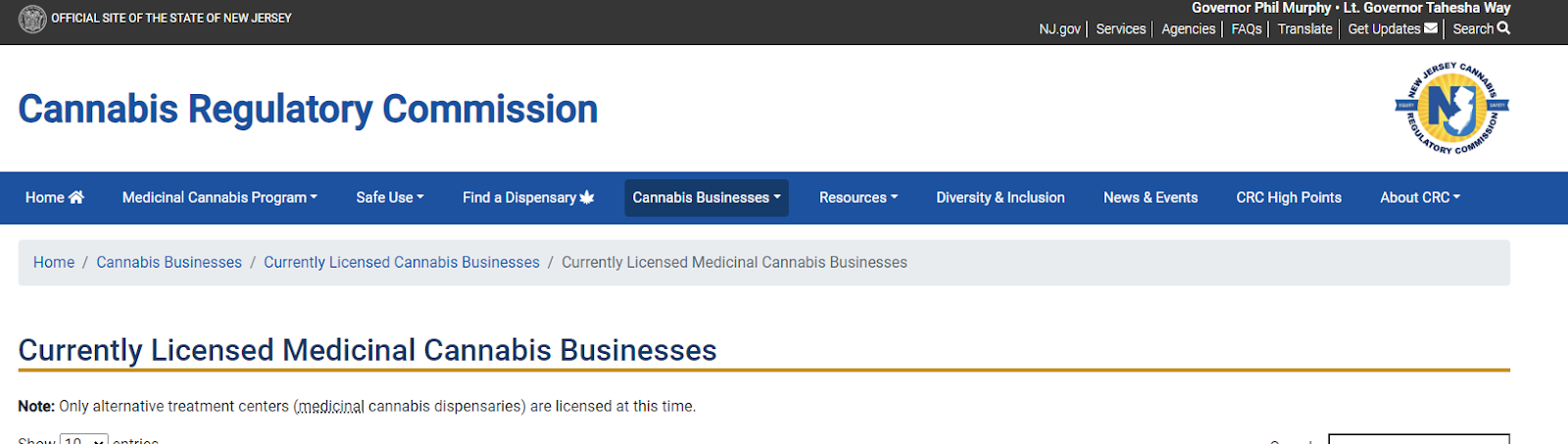
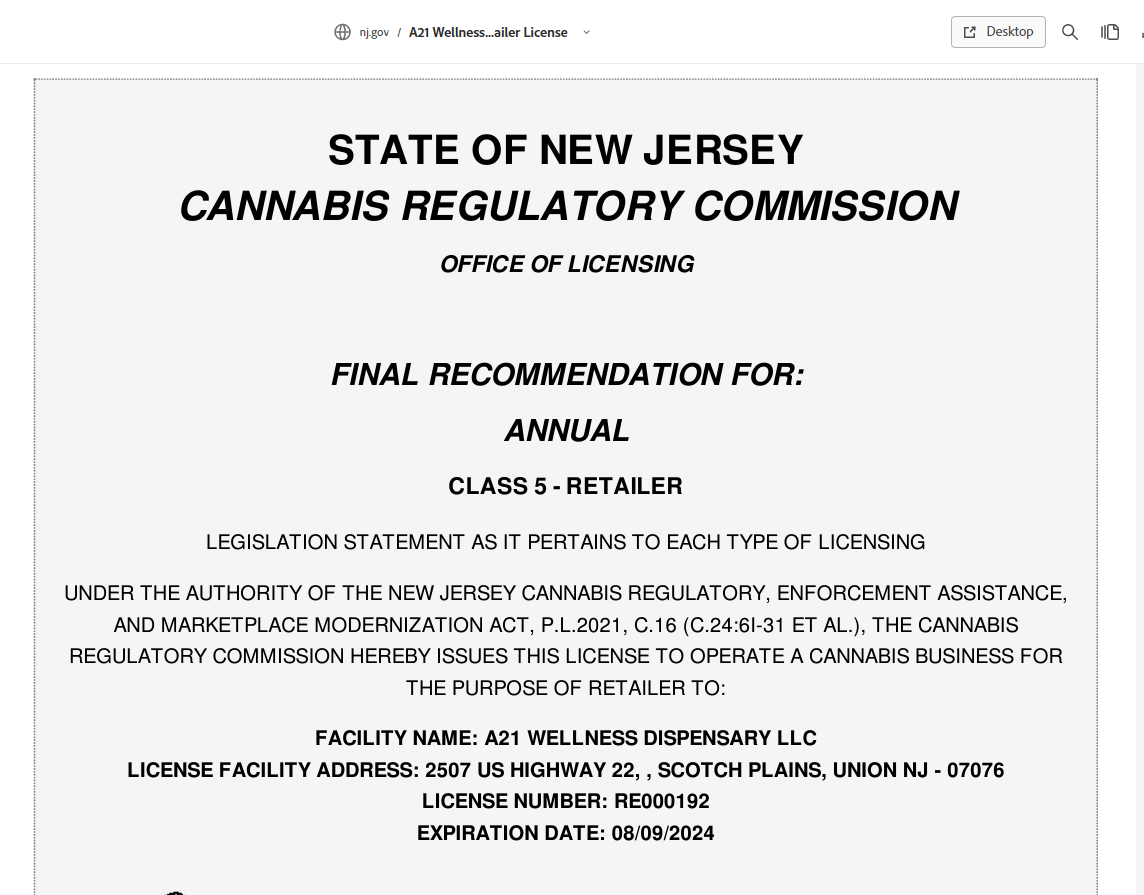
Step 1. Go to https://www.nj.gov/cannabis/businesses/currently-licensed/ . This will take you to the Cannabis Regulatory Commission.
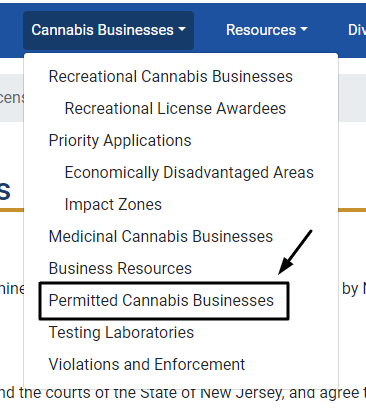
Step 2. Click Cannabis Business and choose Permitted Cannabis Business (for permitted businesses) You can choose from the options provided depending on your preference.
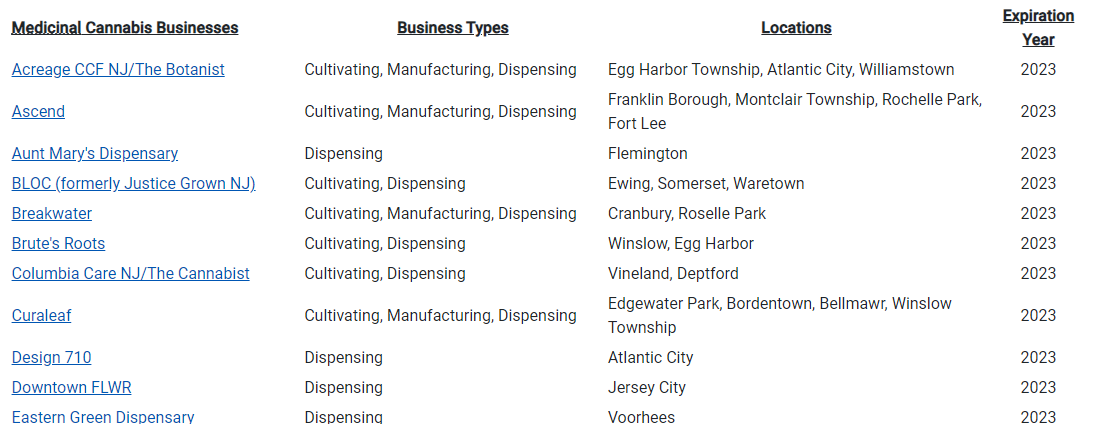
Step 3. Scroll down and you will see the list of Active Cannabis Business Permits & Licenses. Medicinal and Personal-Use Cannabis Businesses.
Step 4. Click the Business you want to check and a PDF file will open in your browser
Steps in Finding a Dispensary
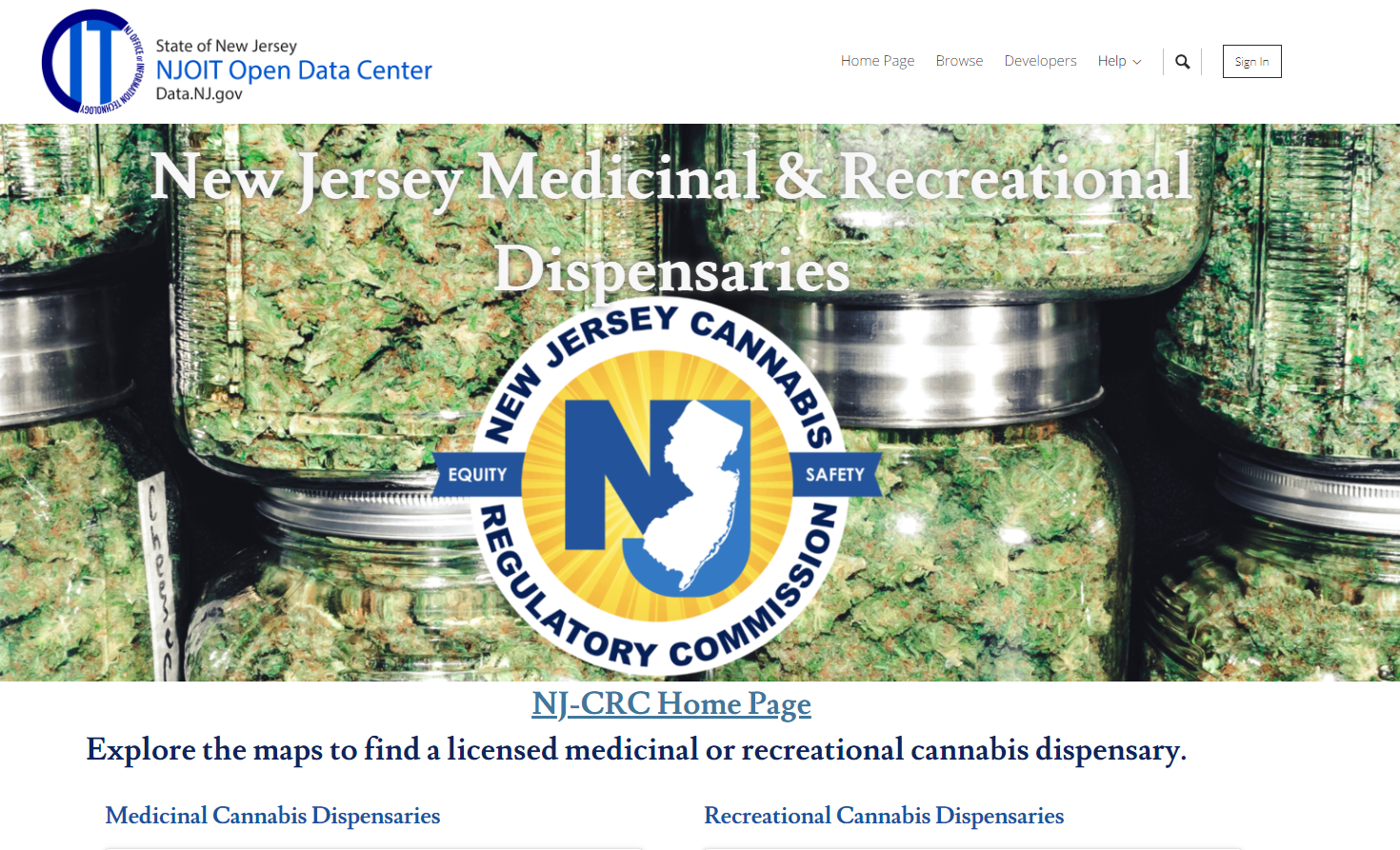
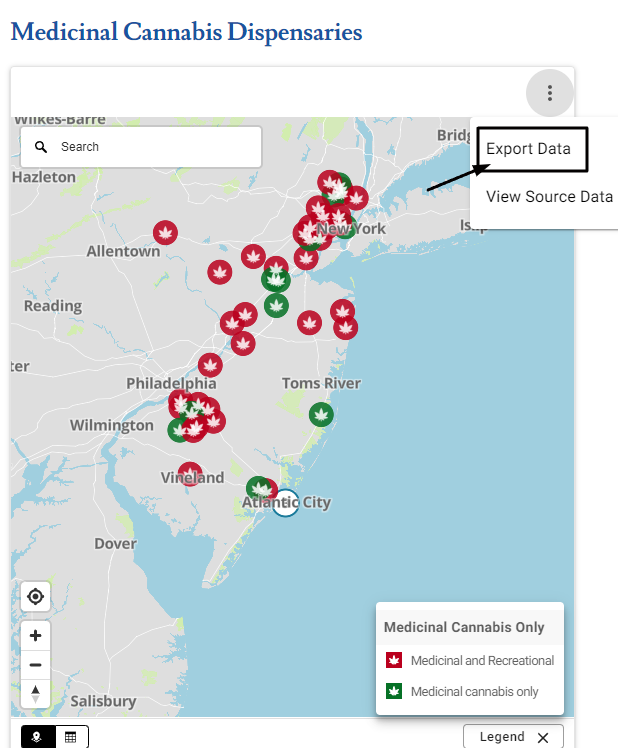
Step 1. Click Find a Dispensary and it will lead you to a new browser window
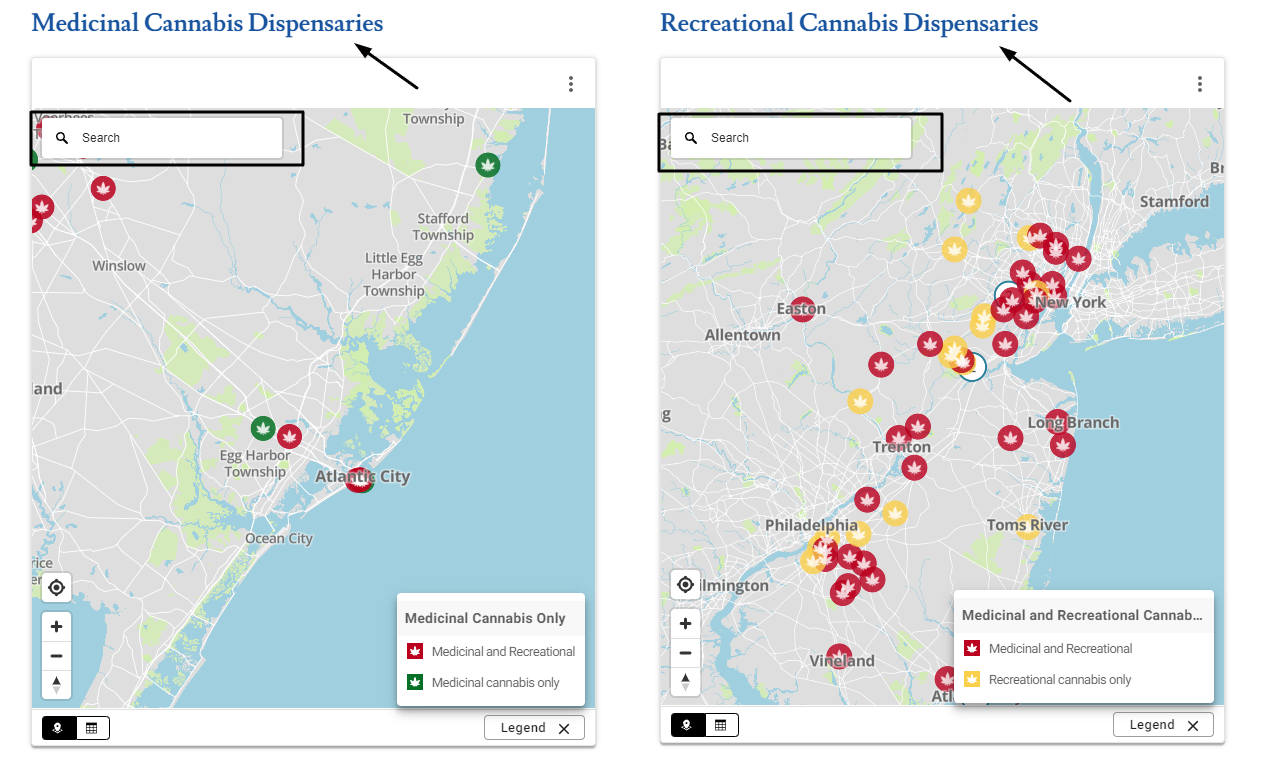
Step 2. Scroll down to the page and choose between Medicinal Cannabis Dispensaries or Recreational Cannabis Dispensaries.
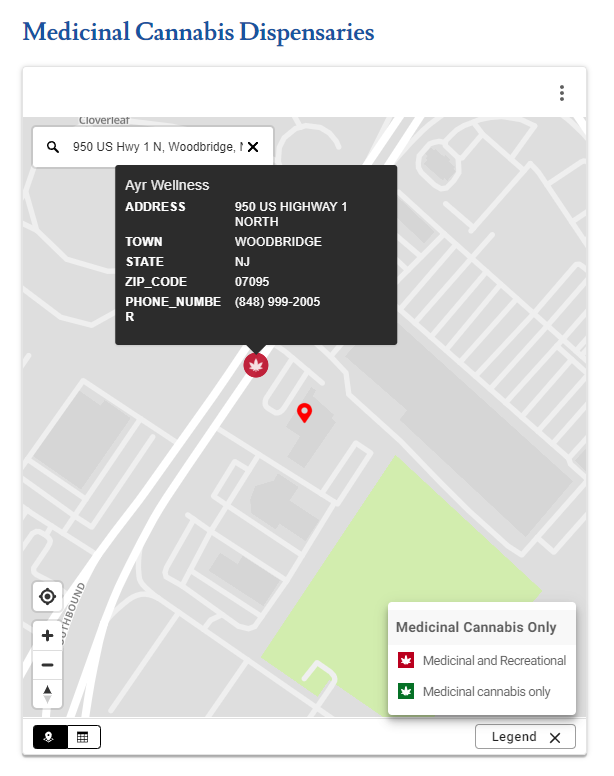
Step 3. Use the search box depending on which Category you would like to search for Medicinal or Recreational.
Step 4. You can either use the address or the Name of the shop/dispensary in the search filed. When searched it will enlarge the map to the location of the shop.
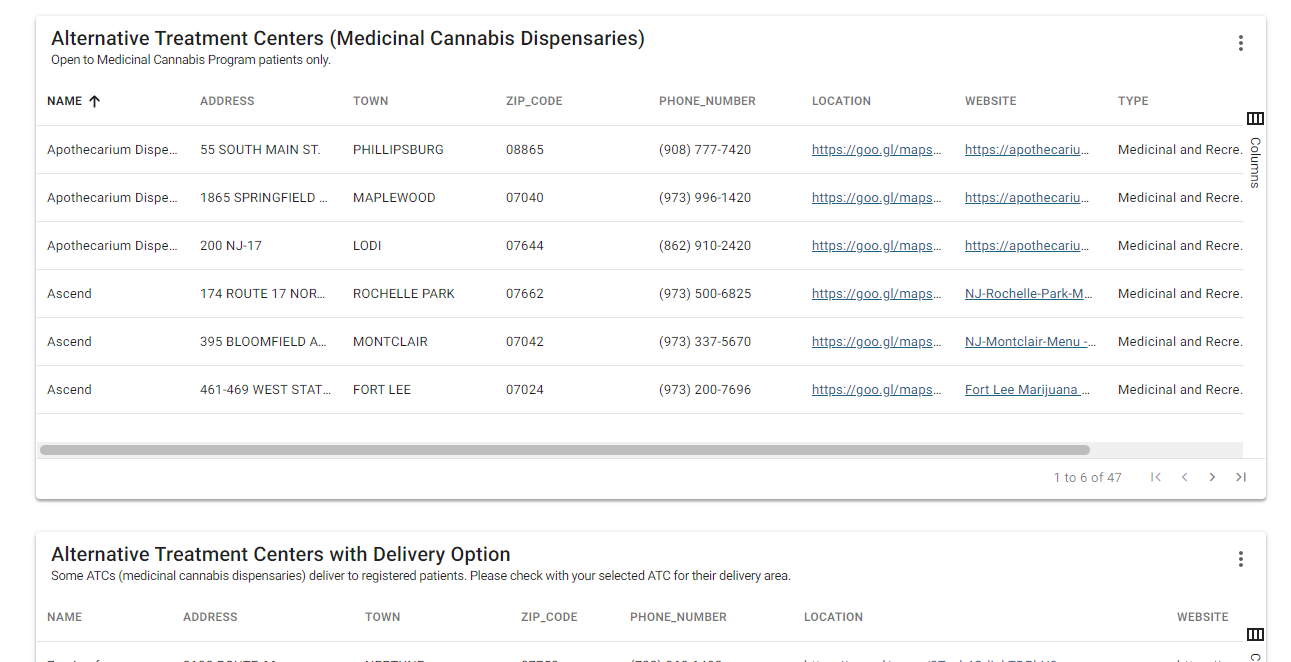
Note: You can export the list by clicking on the 3 dots and clicking Export Data.
Step 5. Scroll down to check more cannabis dispensaries according to their category. You can also export by clicking on the 3 dots.
For Business Owners
As a prospective business owner in the New Jersey cannabis industry, there are several critical steps to consider.
Understanding Eligibility and Prerequisites: Ensure you meet residency requirements and pass background checks to be eligible for a license.
Preparing a Comprehensive Business Plan: Craft a robust business plan that covers the location and facility considerations, security measures, and financial projections. This is essential for demonstrating to regulators that you have a well-thought-out and viable business.
Navigating the Application Process: Thoroughly understand the application process, including completing all required forms, paying application fees, and adhering to specific timelines and deadlines. This will be your roadmap to securing a license.
Compliance and Inspection: Prepare for regulatory inspections by adhering to all compliance measures and staying up-to-date with NJCRC rules. Compliance is an ongoing obligation in the cannabis industry.
Licensing Renewal and Ongoing Obligations: Once you’ve obtained a license, be aware of the renewal process and the ongoing obligations that come with it. Compliance must be maintained throughout your operation.
For Consumers
Consumers in the cannabis market also have a vital role to play in ensuring responsible practices. Here’s what you can do:
How to Verify License Validity: Verify the validity of a cannabis license before purchasing products. Online resources and product labeling are tools you can use to ensure you’re buying from a licensed source.
Reporting Suspicious Activity: If you come across unlicensed sellers or unsafe products, it’s crucial to report these issues to the appropriate authorities. Protecting your health and safety is a collective effort.
Understanding Consumer Rights: Familiarize yourself with your rights as a cannabis consumer. This includes knowing quality control and safety standards, as well as the purchasing and possession limits in New Jersey.
Feedback and Advocacy: Engage in constructive feedback and advocacy for responsible practices. Your input can contribute to the development of a well-regulated and safe cannabis industry in the state.
Common Pitfalls
In the cannabis licensing process, many common pitfalls can hinder progress and result in regulatory violations. It’s essential to be aware of these issues to avoid them:
Incomplete Applications: One common mistake is submitting incomplete applications, which can lead to delays or rejections.
Regulatory Violations: Violating regulations, whether intentionally or due to ignorance, can result in penalties or the revocation of licenses.
Lack of Compliance: Ongoing compliance is critical in the cannabis industry. Failure to meet compliance standards can lead to problems down the line.
Poor Planning: Inadequate business planning, including financial projections and security measures, can lead to difficulties in obtaining a license.
By learning from these common pitfalls, you can enhance your chances of success in the licensing process.
Conclusion
Obtaining a cannabis license in New Jersey is a significant undertaking, whether you’re a business owner or a consumer. Responsible participation in this growing industry is essential for its long-term success. As the cannabis market continues to evolve, the opportunities are vast, and the potential for positive contributions is significant. With the information provided in this guide, you can navigate the licensing process, stay compliant, and play your part in fostering a well-regulated cannabis industry in New Jersey in 2023 and beyond.
As cannabis legalization continues to spread across the country, major corporations are increasingly taking notice and investing in the industry. In April of 2023, a major beverage company announced a $100 million investment in a cannabis-infused drink startup, signaling the growing trend of large corporations entering the cannabis space.
Wholesale marijuana flower prices in Michigan have experienced a recent stabilization and slight increase, providing some hope for producers who faced significant price declines in recent years.
In a groundbreaking development, the Georgia Board of Pharmacy has opened its doors to applications from nearly 120 pharmacies looking to provide medical marijuana products. This historic move makes Georgia the first state in the nation to permit the sale of low-dose cannabis within independent drug stores.
The Alabama Medical Cannabis Commission convened on Thursday for a renewed effort to allocate licenses to companies vying for participation in the state’s burgeoning medical cannabis industry.
Newsletter
yes cannabis news
Stay in touch! YES Cannabis provides innovative solutions and strategies that create sustainable and enduring value for the companies we create, invest, and operate. By subscribing to our newsletter, you'll be the first to know about new developments in the industry and gain valuable insights to help you navigate this rapidly evolving space. Don't miss out on this opportunity to stay informed and connected – sign up today!
A coalition of cannabis businesses, represented by a prominent law firm, has initiated a long-awaited legal action against the U.S. attorney general. Their goal is to prevent the federal government from enforcing cannabis prohibition in states where it’s been legalized. These companies argue that maintaining prohibition in state-regulated markets is unconstitutional, endangering public safety and preventing licensed cannabis businesses from accessing essential financial services and tax benefits available to other industries.
The lawsuit was formally filed in the U.S. District Court for the District of Massachusetts, Western Division. It was brought forward by Verano Holdings Corp., a multi-state operator, alongside Massachusetts-based cannabis companies, Canna Provisions and Wiseacre Farm, and Treevit CEO Gyasi Sellers. Notably, Ascend Wellness Holdings, TerrAscend, Green Thumb Industries, Eminence Capital, and Poseidon Investment Management are “foundational supporters” of this legal challenge.
The plaintiffs are being represented by the law firms Boies Schiller Flexner and Lesser, Newman, Aleo & Nasser LLP. David Boies, the chairman of the former firm, has represented clients such as the Justice Department, former Vice President Al Gore, and parties involved in the case that led to the overturning of California’s same-sex marriage ban.
The lawsuit contends that while Congress originally implemented a cannabis ban through the Controlled Substances Act (CSA) to curb interstate commerce, which ostensibly gave the federal government a legal basis to enforce prohibition at the state level, lawmakers and the executive branch have since abandoned that mission as more states have embraced cannabis legalization.
The complaint argues, “Despite these changes, the federal criminal prohibition on intrastate cannabis remains in place, an unjustified vestige of a long-abandoned policy. This unjustified intrusion of federal power harms Plaintiffs, threatens the communities they serve, and lacks any rational purpose.”
The lawsuit highlights that even though the federal government has adopted a largely hands-off approach to cannabis in recent years, state-licensed cannabis businesses continue to face unique financial challenges. These include a lack of access to banking services, credit cards, and federal tax deductions, specifically under IRS code 280E. Because of these limitations, state-regulated cannabis businesses are forced to rely heavily on cash, leading to significant public safety risks and making them targets for robberies.
The lawsuit further argues that the existing federal ban on cannabis, as outlined in the CSA, constitutes an unconstitutional encroachment on state sovereignty. It contends that Congress has the authority to regulate cannabis in interstate commerce but lacks the constitutional power to regulate it when it’s grown, transported, and distributed intrastate.
The lawsuit delves into the history of cannabis laws in the United States, highlighting that prohibition is a relatively recent policy shift following over a century of legal use and cultivation to some extent. It also points out that the original justification for banning cannabis under the CSA, aimed at preventing interstate commerce, no longer applies.
The legal action is taking place as the Drug Enforcement Administration (DEA) reviews cannabis scheduling following a recommendation by the U.S. Department of Health and Human Services (HHS) to move cannabis from Schedule I to Schedule III under the CSA. While rescheduling could address certain tax-related issues for the industry, it wouldn’t fully legalize cannabis or permit intrastate commerce.
This lawsuit is significant for the cannabis industry, particularly for smaller businesses that have suffered from the unequal treatment and financial burdens caused by the federal government’s policies. The plaintiffs hope to set a new precedent that will allow states to regulate and support cannabis businesses under their own guidelines. The legal battle is expected to proceed, with the possibility of reaching the Supreme Court in the near future, potentially leading to a permanent change in how the federal government handles cannabis.
As cannabis legalization continues to spread across the country, major corporations are increasingly taking notice and investing in the industry. In April of 2023, a major beverage company announced a $100 million investment in a cannabis-infused drink startup, signaling the growing trend of large corporations entering the cannabis space.
Maryland is gearing up for the official implementation of its marijuana legalization law, set to take effect this weekend. The new law will legalize the possession and cultivation of cannabis for personal use, marking a significant milestone for the state. As the majority of existing medical cannabis dispensaries prepare to open their doors to adult consumers, Governor Wes Moore is reaffirming his commitment to fostering an equitable and inclusive cannabis industry.
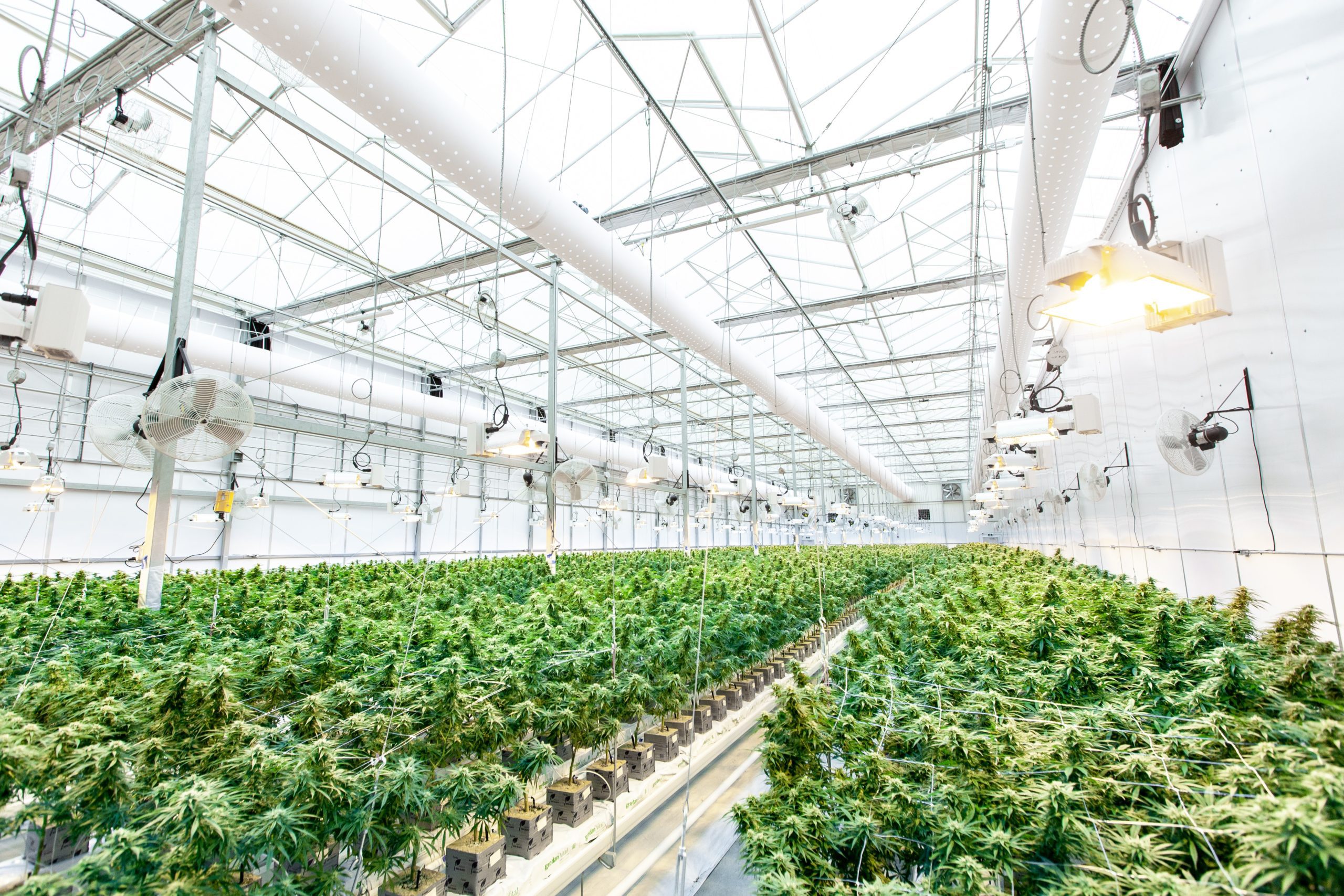
For indoor cultivators, energy costs often rank among the top expenses in their budget. While some growers accept this as a necessary business cost, savvy operators can gain a competitive edge by reducing energy expenses. What’s more, tapping into available incentives to enhance energy efficiency and adopt clean energy technologies can lead to even greater advantages, including substantial rebates.
The Texas Department of Public Safety’s latest data for September 2023 provides an intriguing snapshot of the state’s healthcare landscape. These statistics unveil a nuanced perspective on patient and physician growth, as well as the current state of medical accessibility in the Lone Star State.
Newsletter
yes cannabis news
Stay in touch! YES Cannabis provides innovative solutions and strategies that create sustainable and enduring value for the companies we create, invest, and operate. By subscribing to our newsletter, you'll be the first to know about new developments in the industry and gain valuable insights to help you navigate this rapidly evolving space. Don't miss out on this opportunity to stay informed and connected – sign up today!
New York has initiated a major expansion of its legal cannabis industry by opening applications for hundreds of new marijuana business licenses. This move follows a slow start, with only about two dozen retailers operating since adult-use sales began last December. The application period will run until December 4, and licenses are expected to be awarded early next year.
Governor Kathy Hochul announced this new application period while emphasizing her administration’s commitment to combating unlicensed marijuana businesses that have proliferated due to delays in the state’s legal rollout. The goal is to accelerate New York’s shift from the underground cannabis market to regulated retailers.
Governor Hochul anticipates a large number of license applicants, aiming for over 1,000 legal cannabis shops within the next year. Simultaneously, the Department of Small Business Services in New York City has launched an educational program for cannabis entrepreneurs, offering training and advice from industry leaders through the “FastTrac” program, with applications open until October 18.
Governor Hochul estimated that over 2,000 illegal marijuana stores currently operate in the state, with a significant concentration in New York City. Legal challenges and a slow regulatory process have contributed to this proliferation. However, the governor expressed optimism about overcoming these challenges and achieving a smoother process by the end of the year.
In addition to expanding licenses, New York is intensifying law enforcement efforts against illegal cannabis sellers. Governor Hochul and State Attorney General Letitia James stressed the importance of supporting small businesses and rectifying the harms caused by the “war on drugs.”
Regulatory authorities and lawmakers are actively seeking input to address challenges in the legal cannabis industry, with a focus on social equity and small business opportunities. While there have been some controversial regulatory changes, efforts are underway to expedite consumer access to legal cannabis and provide alternative markets for surplus products from growers.
New York’s efforts to expand its legal cannabis industry and combat the illegal market are progressing. The state aims to transition to a well-regulated industry while prioritizing social equity and small businesses. Challenges remain, and ongoing regulatory adjustments and public input will shape the future of New York’s cannabis industry.
As cannabis legalization continues to spread across the country, major corporations are increasingly taking notice and investing in the industry. In April of 2023, a major beverage company announced a $100 million investment in a cannabis-infused drink startup, signaling the growing trend of large corporations entering the cannabis space.
The city of Los Angeles has taken a significant step towards fostering a healthier and more equitable licensed cannabis market with the launch of a dedicated job board. This innovative initiative aims to connect individuals seeking employment opportunities in the cannabis industry with licensed businesses in the local Los Angeles area.
New Frontier Data presents the 2023 archetypes of cannabis consumers in America. The report highlights nine consumer archetypes based on the latest consumer survey data. The first archetype is Savvy Connoisseurs, comprising 13% of consumers. They are heavy cannabis users who consume it multiple times a day for various medical and recreational purposes. They obtain cannabis from both legal sources like dispensaries and informal channels such as friends or illicit dealers. Savvy Connoisseurs are the highest spenders and often purchase cannabis weekly.
The legalization of cannabis for medicinal and recreational use has opened up new opportunities for entrepreneurs and cultivators across the United States. One state that has experienced a significant shift in its cannabis industry is Arizona. With the passing of Proposition 207 in 2020, which legalized recreational marijuana, the demand for cannabis products has surged, leading to a flourishing market. This article delves into the world of cannabis growers in Arizona, exploring the cultivation process, economic impact, regulations, and the challenges and opportunities that arise in this dynamic industry.
Newsletter
yes cannabis news
Stay in touch! YES Cannabis provides innovative solutions and strategies that create sustainable and enduring value for the companies we create, invest, and operate. By subscribing to our newsletter, you'll be the first to know about new developments in the industry and gain valuable insights to help you navigate this rapidly evolving space. Don't miss out on this opportunity to stay informed and connected – sign up today!