Republican Resistance Blocks Medical Cannabis Legalization Push in North Carolina

Republican Resistance Blocks Medical Cannabis Legalization Push in North Carolina

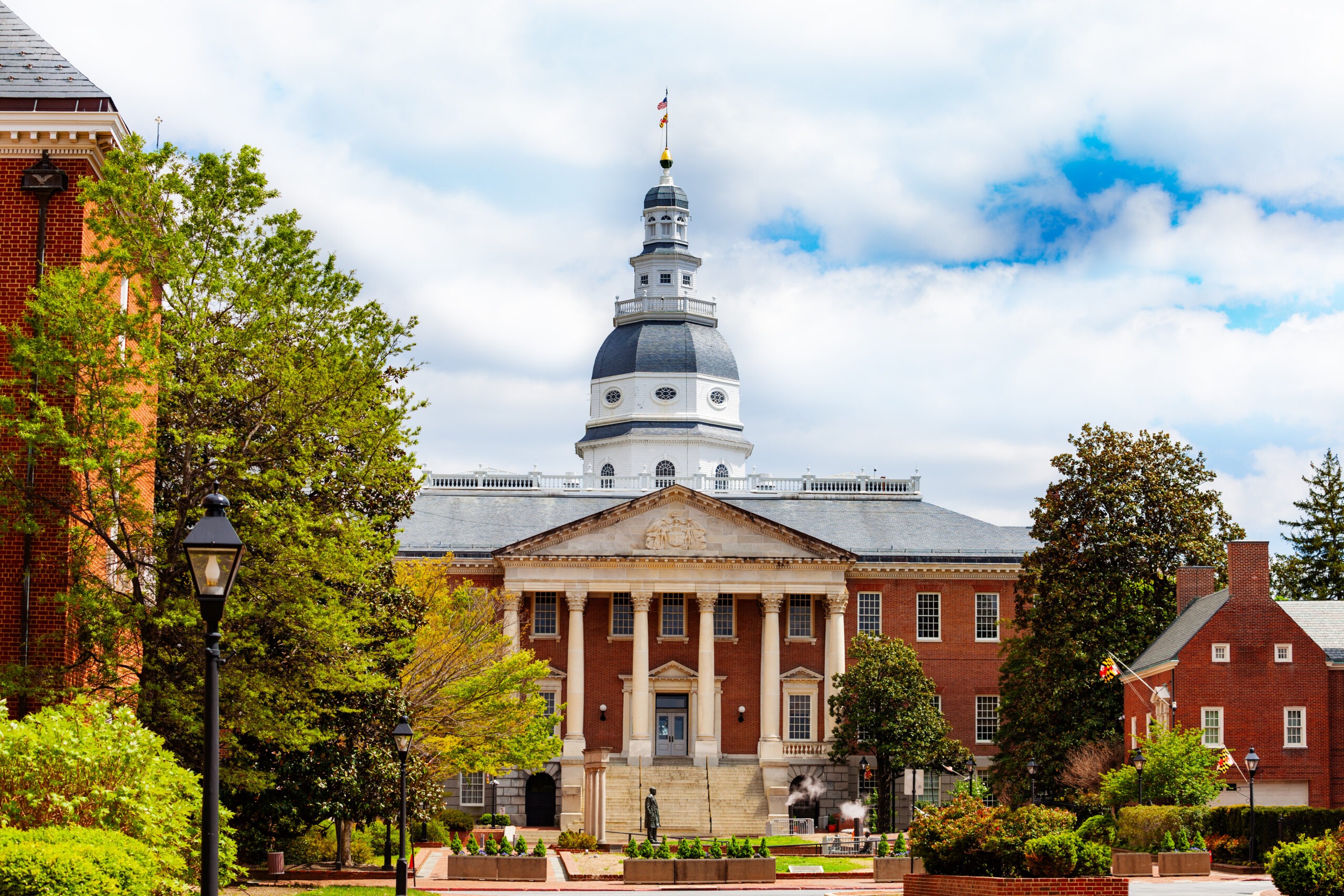
Republican resistance has effectively halted the push for medical cannabis legalization in North Carolina. State House Speaker Tim Moore believes that the opposition from Republican lawmakers has doomed the prospects of passing the Compassionate Care Act in 2023. Despite the state Senate’s approval of the bill, which aimed to provide access to smokable flower for patients with 15 qualifying medical conditions in a tightly regulated market, the House took no further action beyond a committee hearing.

The news story reflects a recurring pattern in North Carolina’s legislative history regarding the push for medical cannabis legalization. North Carolina, like many conservative-leaning states, has traditionally faced challenges in embracing cannabis policy changes due to concerns over public health, law enforcement, and moral considerations.

In recent years, however, there has been an increasing public acceptance of medical cannabis as a viable treatment option for various health conditions. This has led to a shift in public opinion, with a majority of Americans now supporting medical cannabis legalization. Despite this trend, translating public support into legislative action can be difficult, especially in states with conservative political climates.

North Carolina’s struggle with medical cannabis legalization is not unique. In 2021, a similar bill passed the state Senate but failed to advance in the House, illustrating the challenges faced in achieving bipartisan consensus on the issue. This recurring pattern suggests a significant divide within the state’s legislative bodies when it comes to cannabis policy.

State House Speaker Tim Moore’s statement about the bill’s fate reflects the influence of party dynamics within the legislative process. Republican lawmakers, who hold a majority in the House, voiced their opposition to the bill. According to House Republican Caucus rules, a bill must have majority support from members before it can be heard on the floor, making it difficult for the bill to advance. Even if the bill had received support from some Democratic members, Republican opposition would have been the deciding factor.

Despite this setback, there is hope for renewed efforts in the future. Speaker Moore remains optimistic that the issue will be addressed again when the next legislative session begins in May. Proponents of medical cannabis legalization are likely to regroup and strategize during this time, aiming to build broader support and address concerns raised by opponents.

The future of medical cannabis in North Carolina hangs in the balance, as stakeholders continue to engage in discussions, emphasizing the potential benefits for patients and the economic impact of a regulated cannabis market. Proponents will likely highlight the growing body of evidence supporting the therapeutic uses of cannabis and its potential to provide relief for patients with qualifying medical conditions. They may also address concerns raised by opponents, such as implementing strict regulations to ensure safety and prevent abuse.

As the legislative landscape evolves and public opinion continues to shift, the push for medical cannabis legalization in North Carolina may face renewed momentum. It remains to be seen how the issue will unfold in subsequent legislative sessions, but the ongoing dialogue and advocacy efforts indicate a persistent drive to bring medical cannabis access to patients in need.

Source: Mjbizdaily

EXPLORE MORE NEWS

Major Corporations Investing in Cannabis

As cannabis legalization continues to spread across the country, major corporations are increasingly taking notice and investing in the industry. In April of 2023, a major beverage company announced a $100 million investment in a cannabis-infused drink startup, signaling the growing trend of large corporations entering the cannabis space.

Growing Acceptance and Concerns: Cannabis Usage Trends in the US

In a recent survey, half of Americans indicated that they have experimented with marijuana, sparking concerns about the implications of the rapid legalization of cannabis across the country. The findings highlight a potential increase in usage, particularly among young adults.

How to search for a Cannabis License in New Jersey 2023

The cannabis industry in New Jersey has been experiencing significant growth, and obtaining a cannabis license is a crucial step for individuals and businesses looking to participate in this burgeoning market. With the recent legalization of adult-use cannabis in the state, the demand for licenses has never been higher. This guide aims to provide a comprehensive overview of how to search for a cannabis license in New Jersey in 2023.

Maryland Adult-Use Cannabis Program Signed Into Law

In recent years, the legalization of cannabis for both medicinal and recreational use has become a hot topic across the United States. As a result, cannabis delivery services have emerged in Southern California, offering a convenient and discreet way for people to purchase cannabis products from the comfort of their own homes.

Newsletter

Michigan’s Wholesale Cannabis Flower Prices Show Signs of Stabilization and Upward Movement

Michigan’s Wholesale Cannabis Flower Prices Show Signs of Stabilization and Upward Movement

Wholesale marijuana flower prices in Michigan have experienced a recent stabilization and slight increase, providing some hope for producers who faced significant price declines in recent years.

Michigan holds a prominent position in the legal marijuana market and is projected to rank as the second-largest state in terms of annual recreational and medical cannabis sales, trailing only California.

Industry experts attribute the modest stabilization in wholesale prices in Michigan to several factors:

  1. Absorption of excess outdoor cannabis from the previous season.
  2. The increasing number of municipal governments allowing retail sales.
  3. Authorities cracking down on illicit activity within the licensed market.

Narmin Jarrous, Chief Development Officer at Exclusive Brands, a vertically integrated cannabis company based in Livonia, Michigan, highlights the negative impact of illegal and non-compliant products being sold at extremely low prices, which can disrupt the market and affect pricing for various cannabis products.

However, other factors continue to exert downward pressure on prices, including significant outdoor production during the warmer months and the absence of a statewide cap on the number of cannabis business licenses, making the sustainability of wholesale price stabilization uncertain.

Michigan wholesale marijuana flower prices – Per pound

Michigan’s adult-use market was launched in December 2019, initially witnessing high prices due to limited supply and growing demand. However, prices have not returned to those levels. According to data from LeafLink, the average per-pound price for flower dropped by 61% to approximately $1,510 by February 2021, fell further by 29% to $1,075 by February 2022, and slipped another 27% year-over-year to $789 by February 2023.

Nevertheless, there has been a recent upward trend in flower prices. The average per-pound wholesale price rose to $832 in April, $907 in May, and $963 in June.

Producers in Michigan vividly recall the rock-bottom prices they faced, with some selling pounds of flower for as low as $400 or $500. These extreme price levels led to cultivators consolidating or shutting down their operations, unable to sustain such low prices.

The supply-demand dynamics in Michigan’s legal cannabis market underwent significant changes. In 2022, legal cannabis retail sales reached $2.3 billion, and the 2023 MJBiz Factbook projects sales to potentially reach $3.1 billion, including $220 million in medical marijuana sales.

Michigan’s lack of a statewide cap on cannabis business licenses resulted in explosive growth in both supply and demand. LeafLink strategist Ben Burstein explains that numerous cannabis retail operations and cultivation licenses were established in early 2020, but it took time for new cultivators to optimize their yields, leading to high wholesale prices initially.

Additionally, the COVID-19 pandemic boosted marijuana sales nationwide, attracting capital investments in Michigan’s legal market. This influx of investment, combined with improved yields and production capacity from existing cultivators, resulted in a surge of supply by late 2021. However, the market did not have enough demand to absorb the outdoor harvest, leading to a significant decline in prices.

The oversupply issue extended to other product formats as manufacturers converted excess flower into cannabis distillate and derivatives.

The recent stabilization and slight increase in Michigan’s wholesale flower prices can be attributed to several factors. The time elapsed since the previous outdoor harvest has allowed for the conversion of excess flower into distillate and its purchase by consumers. The increase in demand, partially due to seasonality and the adoption of retail sales by local governments, has also contributed to the changing price trend.

Narmin Jarrous of Exclusive Brands believes that increased enforcement actions by Michigan’s Cannabis Regulatory Agency (CRA) have played a role in stabilizing prices. The CRA has taken action against operators engaged in illicit conduct, which has negatively affected the market and pricing.

Calyxeum’s CEO, Rebecca Colett, mentions that the drastic price drop was likely caused by illegal activity that the CRA previously overlooked. With a renewed focus on enforcement under the new CRA chief, Brian Hanna, Colett expects more stability in prices.

During the period of declining prices, Michigan’s cannabis producers had to adapt to survive and maintain margins. Cost-cutting measures included installing automated production systems to reduce payroll expenses and seeking new vendors and packaging machinery to lower packaging costs.

Despite the recent positive trends, there are concerns about the future. LeafLink analyst Ben Burstein expects another substantial outdoor harvest later this year, combined with an increase in cultivation and processing licenses issued since last year. This may lead to a surplus of supply relative to demand, potentially driving prices down again.

In response, cannabis producers like Calyxeum remain cautious and focus on operating efficiently to withstand any potential price fluctuations. Colett anticipates a prosperous summer for cultivators due to late-starting outdoor grows and predicts a potential production drought, allowing cultivators to charge premium prices similar to those during the pandemic.

Looking ahead, Jarrous hopes for more stability in the industry as Michigan’s cannabis market matures and producers gain confidence. However, the seasonal nature of cannabis supply in Michigan and the market’s exposure to outdoor production capacity make it likely that prices will start declining again in the future. Calyxeum plans to operate conservatively and improve margins while remaining prepared for any potential challenges in the fall.

Source: Mjbizdaily

EXPLORE MORE NEWS

Major Corporations Investing in Cannabis

As cannabis legalization continues to spread across the country, major corporations are increasingly taking notice and investing in the industry. In April of 2023, a major beverage company announced a $100 million investment in a cannabis-infused drink startup, signaling the growing trend of large corporations entering the cannabis space.

Nevada’s Cannabis Industry Undergoes Sweeping Reforms: A Look at Senate Bill 277

Global Cannabis Times recently reported that Nevada’s cannabis industry is on the brink of a major transformation following the recent passing of Senate Bill 277, a game-changing piece of legislation that promises to shape the future of recreational and medicinal marijuana in the state. Effective January 1, 2024, this bill brings a series of substantial changes, all aimed at enhancing customer experience, facilitating business operations, and promoting social equity within the cannabis sector.

Cannabis Delivery Services: Bringing Accessibility to Cannabis Enthusiasts Across the US

Legalizing cannabis in the United States has opened doors to new possibilities for consumers, but accessibility remains a concern for many. For some, reaching a dispensary can be challenging due to transportation limitations, health issues, or the need for childcare. In response to these challenges, cannabis delivery services have emerged as a godsend for those seeking a convenient and hassle-free way to access their favorite products.

Unlocking Entrepreneurial Success in the Booming Cannabis Industry

In recent years, the cannabis industry has undergone a remarkable transformation, transitioning from an underground market to a legitimate and rapidly expanding sector. With the legalization and decriminalization of cannabis in various regions, entrepreneurial opportunities within the cannabis space have flourished. This comprehensive article explores the vast potential for entrepreneurship in the cannabis industry, covering crucial aspects such as starting a cannabis-related business, navigating complex regulations, crafting effective marketing strategies, exploring investment prospects, and drawing inspiration from successful stories.

Newsletter

The Significance of Medical Cannabis in Shifting Public Attitudes

The Significance of Medical Cannabis in Shifting Public Attitudes

New Frontier Data recently unveiled the first part of their report titled “Cannabis Consumers in America 2023: An Overview of Consumers Today.” This comprehensive study delves into the preferences, behaviors, and beliefs of over 4,300 adult cannabis consumers, as well as the perspectives of more than 1,100 non-consumers regarding potential cannabis use and their opinions about the plant.

Among the survey’s findings, one aspect that stood out was the enduring importance of cannabis as a medical remedy. This significance extends not only to current consumers who rely on cannabis for improved well-being, but also to its role in legitimizing the plant among those who do not consume it.

The survey revealed that 42% of adults in the United States have either used cannabis or are likely to use it in the future. Furthermore, 37% of U.S. adults fall into the category of “current consumers,” indicating that they use cannabis at least once a year and plan to continue doing so.

Interestingly, there has been a slight increase in the percentage of U.S. adults who identify as cannabis consumers compared to last year. Concurrently, the proportion of adults who claim they will never consume cannabis has slightly decreased from 34% to 30%. These findings suggest a gradual shift in societal attitudes towards cannabis, possibly driven by reduced stigma and broader legal accessibility.

Cannabis consumers’ openness about their use—and their success in managing medical conditions with cannabis—has affected the broader narrative about the drug.

The openness displayed by cannabis consumers regarding their use and the positive impact of cannabis in managing various medical conditions have influenced the overall perception of the drug. Notably, the majority of current consumers, approximately 70%, perceive their cannabis use as having at least some medical purpose. Among them, 15% exclusively use cannabis for medical reasons, 28% primarily for medical purposes, and 25% primarily for recreational enjoyment, with some medical benefits as well.

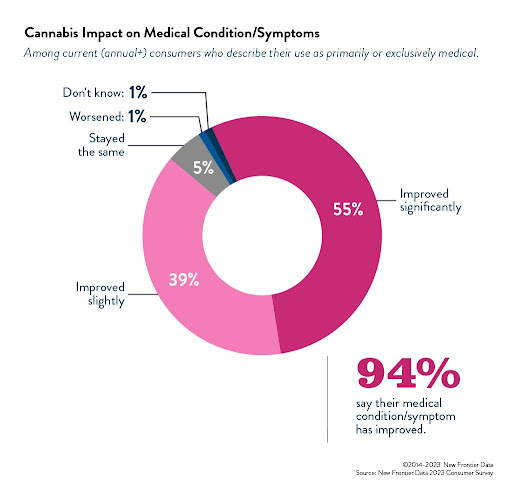
Remarkably, 94% of self-identified medical consumers reported that using cannabis has had a positive effect on their medical conditions or symptoms. Over half of them, 55%, experienced significant improvements in their well-being.

While cannabis patients have long appreciated these medical benefits, the recent shift in societal acceptance has allowed consumers to openly discuss their cannabis use with friends, family, and even coworkers. Surprisingly, 48% of consumers stated that their colleagues were aware of their cannabis consumption.

As cannabis becomes destigmatized, individuals are increasingly sharing their positive medical experiences with their social circles. This personalized counternarrative challenges the prohibitionist messaging based on propaganda prevalent during the past few decades.

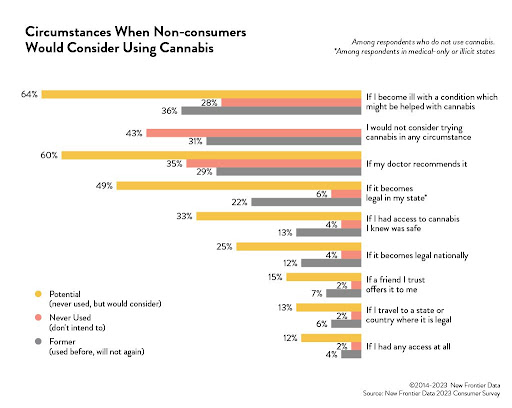
Non-consumers, on the other hand, find medical reasons to be the most persuasive when considering cannabis use. Exposure to the positive experiences of loved ones using medical cannabis, coupled with the widespread legalization of cannabis for medical purposes in numerous states, has contributed to the plant’s legitimacy as medicine in the eyes of non-consumers. Many non-consumers would be open to trying cannabis if they were suffering from a medical condition that could potentially benefit from it or if it were recommended by a healthcare professional.

While the legal cannabis industry predominantly focuses on the adult-use market, it is crucial to keep medical cannabis at the forefront. Medical cannabis offers relief to millions of consumers who have had limited success with alternative remedies. Additionally, medical cannabis garners compassion and support from non-consumers who recognize its value in promoting health and well-being.

Source: New Frontier Data

EXPLORE MORE NEWS

Major Corporations Investing in Cannabis

As cannabis legalization continues to spread across the country, major corporations are increasingly taking notice and investing in the industry. In April of 2023, a major beverage company announced a $100 million investment in a cannabis-infused drink startup, signaling the growing trend of large corporations entering the cannabis space.

A Guide to Opening a Cannabis Dispensary in Minnesota

On May 30, 2023 Minnesota Gov. Tim Walz signed an expansive cannabis legalization bill into law, allowing the recreational use of cannabis for adults 21 and older starting Aug. 1. The Legislature passed the bill with a handful of Republicans joining a nearly united Democratic vote in favor. Although the bill has passed, dispensaries can’t open until the state figures out a licensing system for the businesses, so they won’t open for at least another year — some estimate in early 2025. This article aims to provide a detailed guide on how to open a cannabis dispensary in Minnesota. We will explore the current cannabis market and outlook, license types, scoring criteria, application fees, and the importance of seeking professional assistance from cannabis consultants like Global Go.

10 Gift Ideas for Cannabis Enthusiasts

Slowly but surely, state by state, the U.S. is continuing to embrace cannabis. With the increasing number of states legalizing or decriminalizing weed, the market for innovative cannabis products is growing rapidly. Need a great gift idea? Why not upgrade the experience for your cannabis-friendly friends with some high-tech gifts designed specifically for cannabis users? From consumption devices to storage containers, here are nine cutting-edge gift ideas from startups and established companies that are making a mark in this booming industry.

Navigating the Evolving Regulatory Landscape: Key Considerations for Multi-State Expansion

As the cannabis industry continues to flourish and expand across multiple states, it is crucial for cannabis business owners and aspiring entrepreneurs to navigate the ever-changing regulatory landscape. In this blog post, we will explore the key considerations for successfully expanding a cannabis business across different states, ensuring compliance, and capitalizing on growth opportunities.

Newsletter
Exploring Cannabis Consumer Archetypes in America: Trends and Insights for 2023

Exploring Cannabis Consumer Archetypes in America: Trends and Insights for 2023

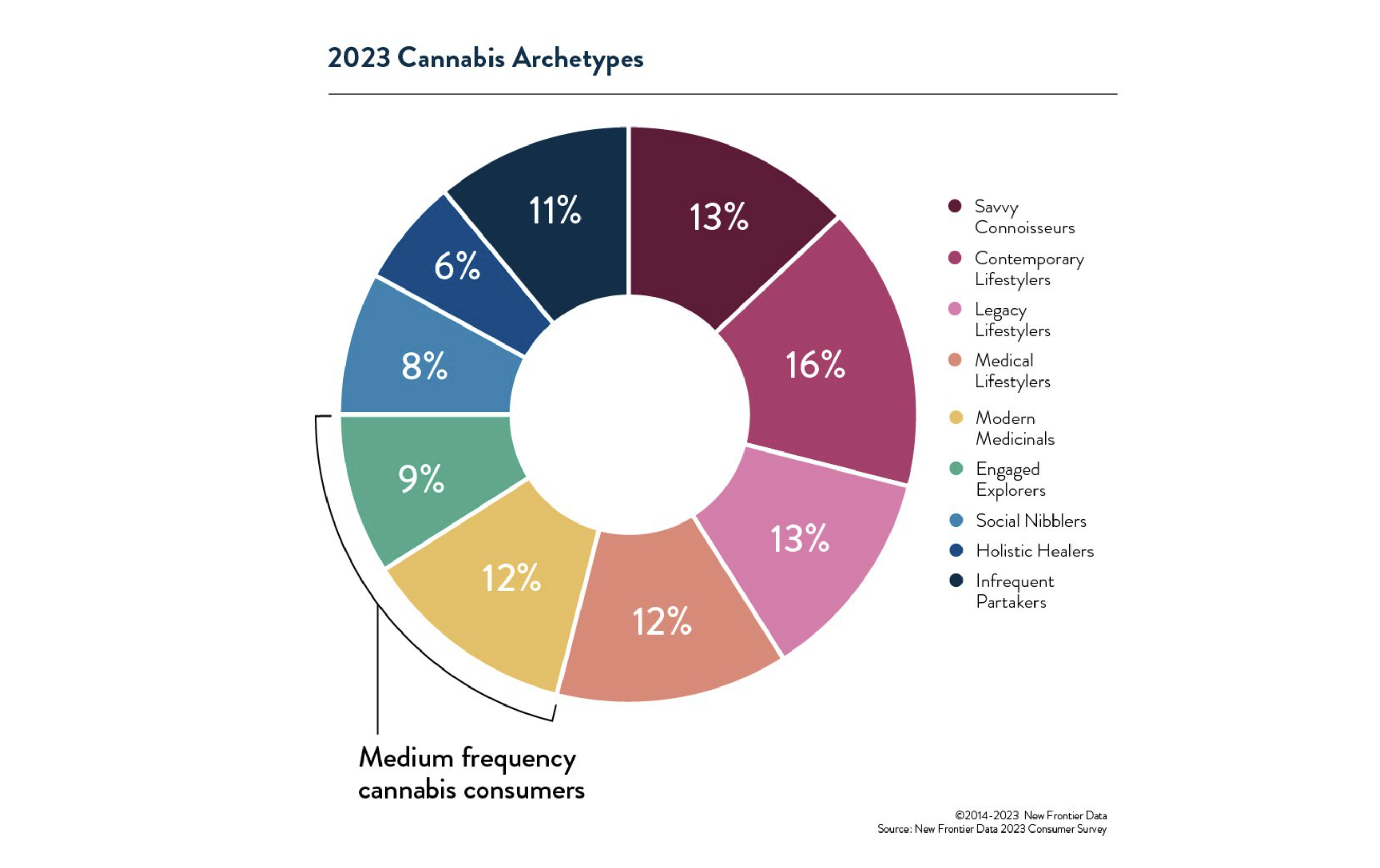
New Frontier Data presents the 2023 archetypes of cannabis consumers in America. The report highlights nine consumer archetypes based on the latest consumer survey data.

The first archetype is Savvy Connoisseurs, comprising 13% of consumers. They are heavy cannabis users who consume it multiple times a day for various medical and recreational purposes. They obtain cannabis from both legal sources like dispensaries and informal channels such as friends or illicit dealers. Savvy Connoisseurs are the highest spenders and often purchase cannabis weekly.

The second archetype is Contemporary Lifestylers, representing 16% of consumers. They primarily use cannabis recreationally to relax. They prefer smokable cannabis but also try non-smokable products occasionally. All Contemporary Lifestylers live in states where cannabis use is legal and rely on regulated sources like dispensaries. They are moderate-to-high spenders and frequently acquire cannabis.

The third archetype, Medical Lifestylers, makes up 12% of consumers. They are frequent cannabis users who primarily use smokable products but occasionally explore edibles or other non-smokable forms. Medical Lifestylers consume cannabis for medical reasons, such as pain management or treating medical conditions. They mainly obtain cannabis from legal dispensaries and delivery services. Medical Lifestylers are the second-highest spenders after Savvy Connoisseurs.

The fourth archetype, Legacy Lifestylers, represents 13% of consumers. Like other Lifestyler archetypes, Legacy Lifestylers are frequent cannabis consumers who predominantly smoke cannabis for recreational purposes. However, they live in states where cannabis is illegal or are unregistered patients in medical-only states, limiting their access to legal dispensaries. Therefore, they primarily rely on friends and illicit dealers for their cannabis supply. Legacy Lifestylers acquire cannabis with similar frequency as their legal counterparts and spend only slightly less per purchase.

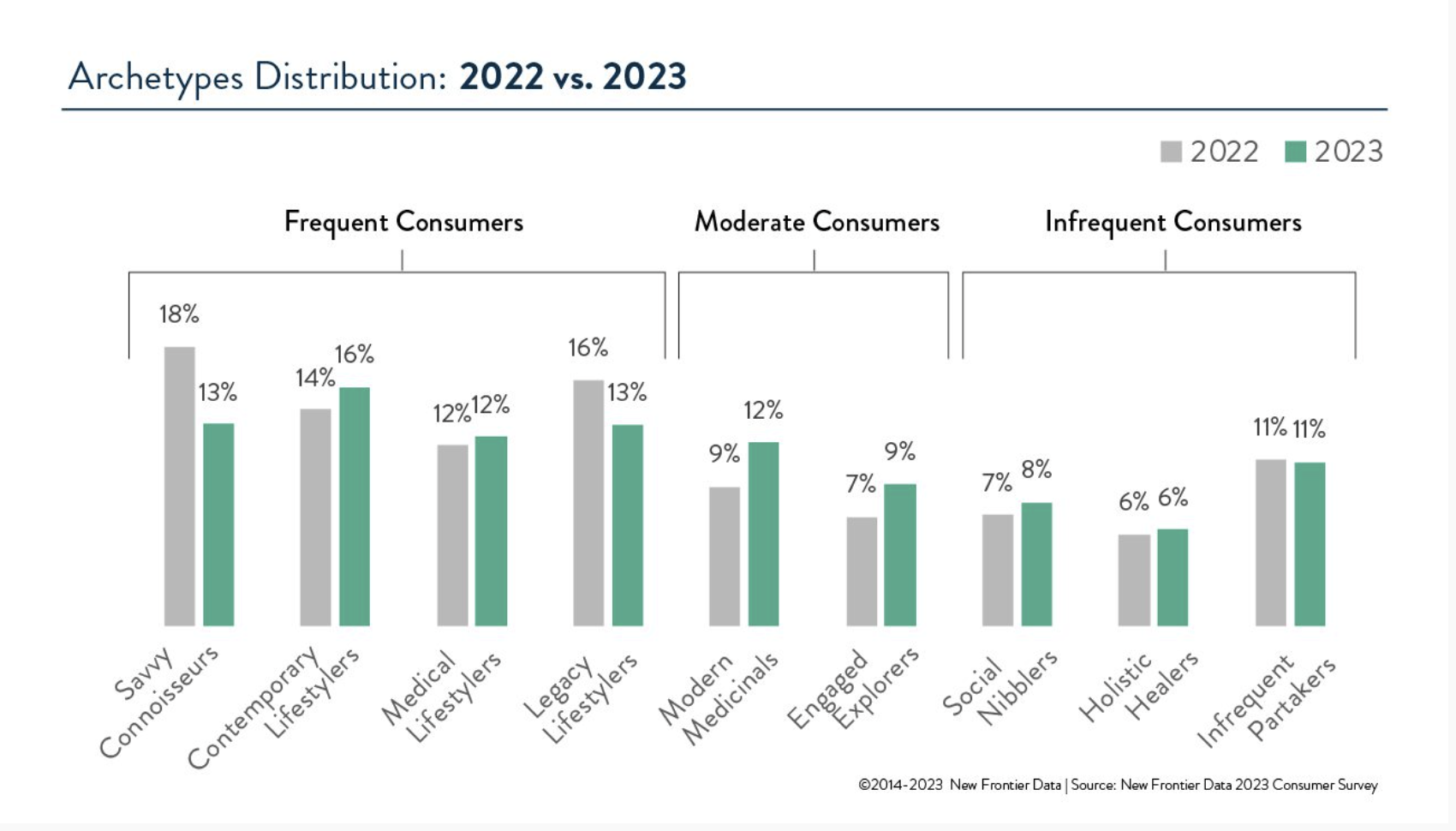
The data highlights changes in consumer distribution among the archetypes compared to the previous year. The Legacy Lifestyler archetype has decreased from 16% to 13% due to the expansion of legal access to cannabis in several states. As more states legalize cannabis, Legacy Lifestylers are expected to transition into the Contemporary and Medical Lifestyler archetypes based on their medical or recreational goals. Over time, exposure to a wider range of legal cannabis products may lead them to prefer non-smokable options and potentially shift to other archetypes.

The Savvy Connoisseur archetype has also reduced in size from 18% to 13%, potentially influenced by new consumers entering the market and pandemic-related changes in consumption habits. Consumers in newly legal markets may have established their preferred products and routines, requiring less experimentation. As cannabis becomes more mainstream, the need to educate friends about new products or procure products for social circles may also decrease.

For effective communication with these consumer segments, the article suggests reaching out to NXTeck’s B2C division, which specializes in delivering targeted digital campaigns in the cannabis industry. NXTeck offers audience targeting, analytics, and attribution reporting based on location, point-of-sale, and social science data, utilizing the industry’s largest cannabis and CBD consumer audience dataset.

For further information on the consumer archetypes, the complete report will be released next month. For inquiries, contact NXTeck via email at sales@nxteck.com.


Source: NewFrontierData

EXPLORE MORE NEWS

Major Corporations Investing in Cannabis

As cannabis legalization continues to spread across the country, major corporations are increasingly taking notice and investing in the industry. In April of 2023, a major beverage company announced a $100 million investment in a cannabis-infused drink startup, signaling the growing trend of large corporations entering the cannabis space.

U.S. Cannabis Sales Could Total $71B in 2030 Without Federal Legalization

The recently released 2023 U.S. Cannabis Report by New Frontier Data has shed light on the remarkable growth potential of the cannabis industry in the United States. With state-level legalization gaining momentum and the absence of federal policy reform, the report predicts a substantial increase in annual cannabis sales over the next seven years.

The Changing Landscape of Cannabis Product and Sourcing Choices

According to the latest data from New Frontier, consumer behavior regarding the purchase of cannabis products is experiencing a notable shift. The data reveals that more consumers are opting to order their cannabis products from brick and mortar dispensaries, indicating a growing preference for in-person shopping experiences. In 2022, 34% of consumers chose physical dispensaries, and this figure has risen to 43% in 2023. Additionally, there has been a slight reduction in cannabis delivery, with 18% of consumers utilizing this option in 2022, which has decreased to 15% in 2023. This trend can be attributed to a post-COVID era where individuals feel more comfortable leaving their homes and seeking out physical retail experiences. In this article, we will explore the normalization of cannabis product and sourcing choices, and how these changes are shaping the industry.

The origins of 420 and why it continues to be a day of celebration for cannabis enthusiasts worldwide

April 20th, 4/20, or 4:20 on the clock, has become a celebrated day and time in cannabis culture. People around the world gather to enjoy cannabis products and advocate for the legalization of marijuana. But how did this date and time become so significant?

Newsletter

Proposed Legislation Aims to Address Cannabis Taxation Issues in California

Proposed Legislation Aims to Address Cannabis Taxation Issues in California

Under the Adult Use of Marijuana Act, the cannabis excise tax in California is currently set at 15% of gross receipts from licensed retail cannabis sales. In addition to this state-level tax, many local governments impose their own additional taxes on cannabis, with some jurisdictions, including Los Angeles, charging as high as 10%.

However, the current system of taxation has led to what some consider to be double or triple taxation on cannabis, creating an unfair burden on the industry. Local governments are required to include state and local excise taxes in the definition of “gross receipts,” which subsequently affects the additional sales taxes imposed on cannabis.

Recognizing this issue, Senate Bill 512 (SB 512) aims to put an end to this multiple taxation on cannabis, providing much-needed relief to the industry. The bill seeks to clarify the tax structure and ensure that cannabis businesses are not unfairly burdened by excessive taxes.

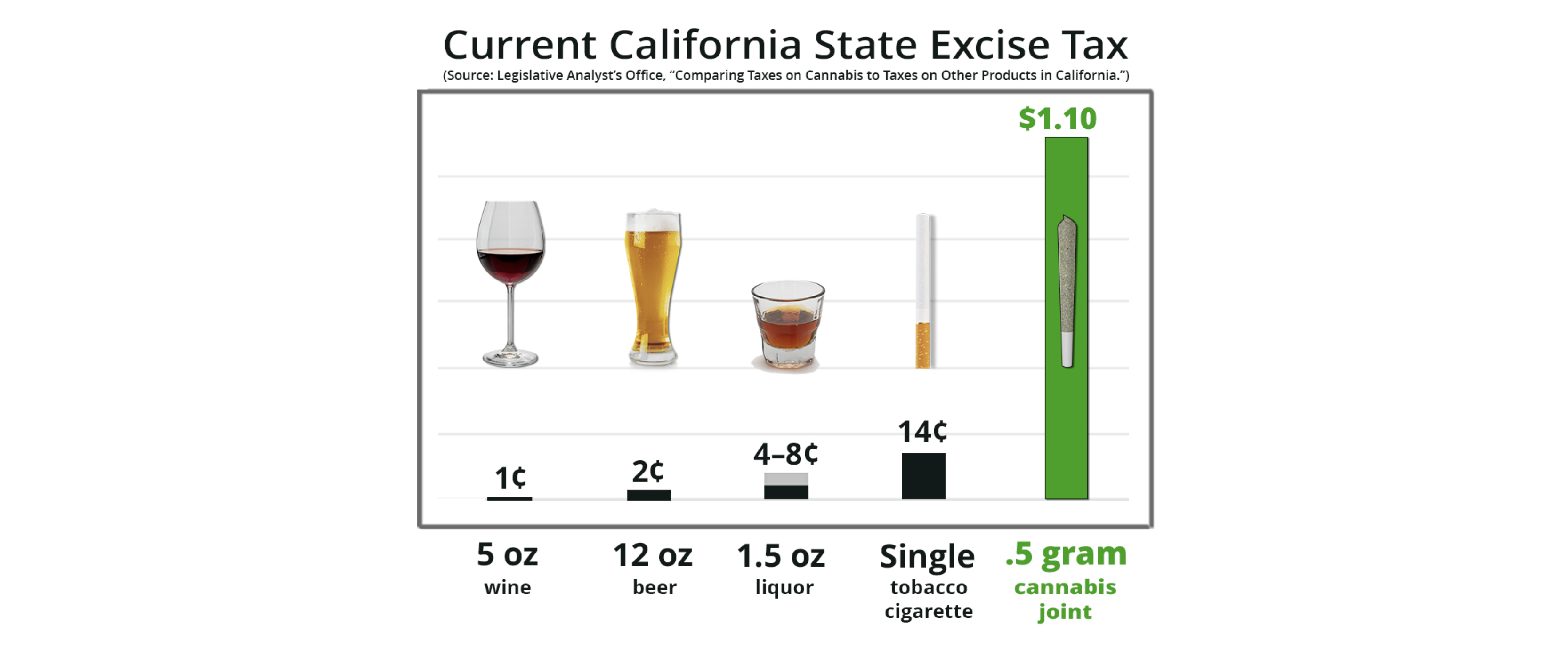
The California chapter of the National Organization for the Reform of Marijuana Laws (CA NORML) is a proponent of SB 512 and encourages individuals to reach out to their lawmakers in support of this proposed legislation. The organization emphasizes that the current taxation of cannabis in California is disproportionate when compared to similar goods. When the sales and use tax of 7.25% to 10.5% is added on top of the 15% excise tax, it results in an increase of 8 to 11 cents in the cost of a joint—more than the total state excise taxes for an alcoholic beverage. Moreover, when local cannabis taxes are factored in, the difference can be as high as 18 cents.

Despite lower sales figures, cannabis sales already contribute more to California’s revenue than alcohol taxes. However, the excessive taxation of cannabis hampers legal access for consumers and inadvertently fuels the illicit cannabis market. Advocates argue that consumers should have access to safe, tested, and fairly taxed cannabis products.

It’s important to understand the background behind the issue. The problem of double taxation arose when the excise tax payment responsibility was shifted from distributors to retailers through the 2022 budget bill AB 195. This change resulted in the definition of gross receipts for assessing sales and use taxes including the 15% excise tax. Furthermore, the California Department of Tax and Fee Administration (CDTFA) instructed retailers to include delivery fees and local taxes in the definition of gross receipts, leading to triple taxation.

Complicating matters further, many local jurisdictions have their own cannabis tax laws that are in direct conflict with the CDTFA’s guidance. For example, the City of Los Angeles has a conflicting definition of their gross receipts tax, leaving retailers in LA and elsewhere vulnerable to fines or loss of licensure.

To illustrate the impact of excessive taxation, a recent $73.35 purchase at a California cannabis shop resulted in the customer paying $97.20 at the register. SB 512 would have saved the customer $2.03 by eliminating the re-taxation of the excise taxes, which represents a small step toward achieving cannabis tax fairness.

 If enacted, SB 512 would address the issue of double and triple taxation on cannabis, which is believed to contribute to the resurgence of the illicit market in California. By rectifying the tax structure, the legislation aims to protect the legal cannabis industry and maintain a solid tax base for the state.

In summary, SB 512 is a proposed bill that seeks to address the complex issue of cannabis taxation in California. By eliminating multiple taxation and establishing a fair tax structure, the legislation aims to support the legal cannabis industry, promote consumer access to safe products, and discourage the growth of the illicit market. CA NORML encourages citizens to engage with their lawmakers and express their support for SB 512.


Source: canorml.org


EXPLORE MORE NEWS

Major Corporations Investing in Cannabis

As cannabis legalization continues to spread across the country, major corporations are increasingly taking notice and investing in the industry. In April of 2023, a major beverage company announced a $100 million investment in a cannabis-infused drink startup, signaling the growing trend of large corporations entering the cannabis space.

New York Expands Legal Cannabis Industry and Cracks Down on Illegal Market

New York has initiated a major expansion of its legal cannabis industry by opening applications for hundreds of new marijuana business licenses. This move follows a slow start, with only about two dozen retailers operating since adult-use sales began last December. The application period will run until December 4, and licenses are expected to be awarded early next year.

NCAA Medical Committee Calls for End to Cannabis Penalties for College Athletes

In a significant and up-to-date policy shift, the NCAA (National Collegiate Athletic Association) medical committee has recommended that college athletes should no longer face penalties for using cannabis. This progressive stance reflects the evolving landscape of cannabis regulations across the United States. The committee has firmly asserted that drug testing efforts should be redirected towards detecting performance-enhancing substances, leaving cannabis use without punitive measures. This recommendation comes after the committee conducted a thorough review of existing policies and solicited input from member organizations. It anticipates that the final decision on this matter will be made in the fall, following consultations and legislative processes within each of the NCAA’s governing bodies.

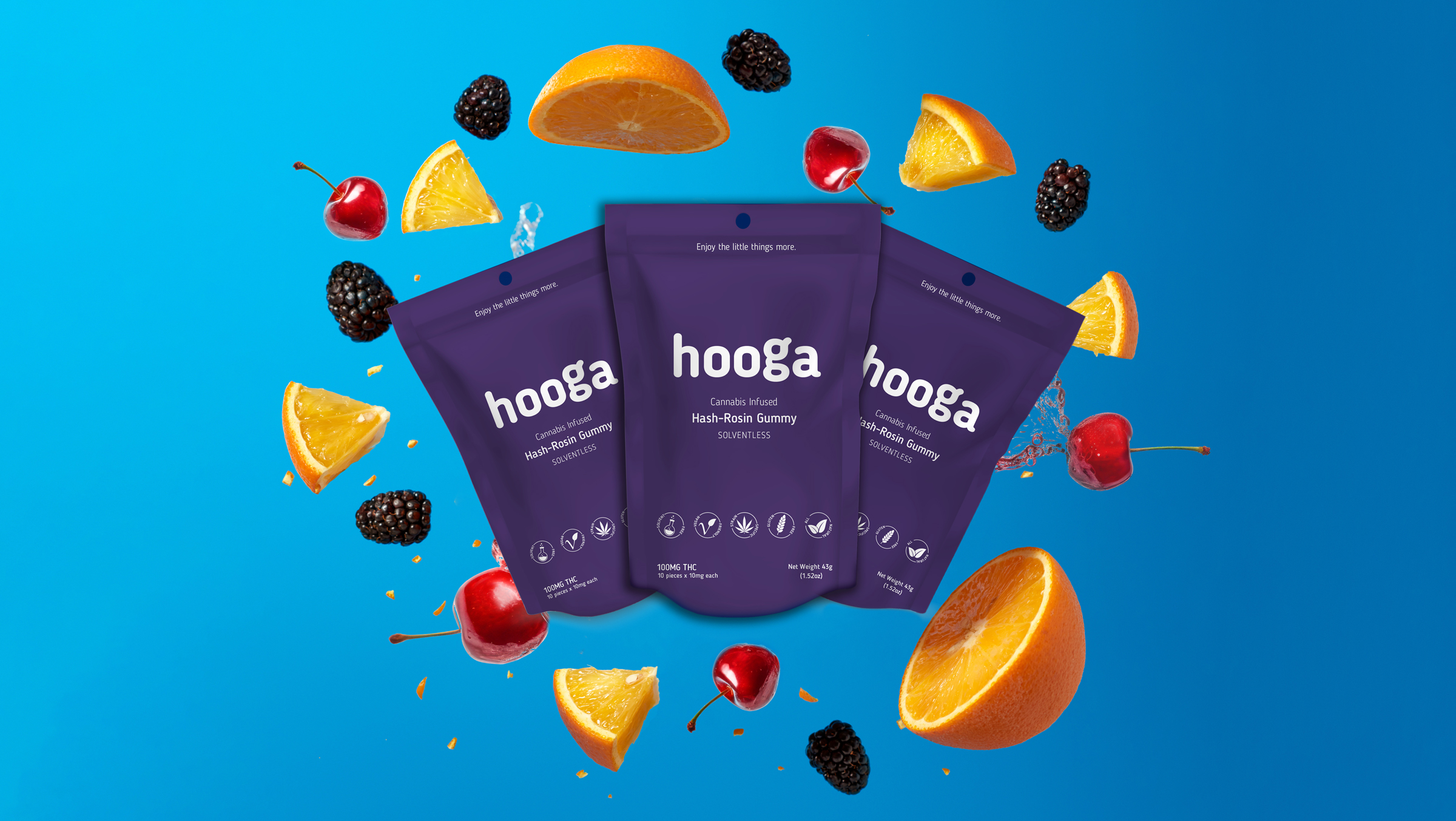
Market Research Reveals High Brand Potential for Hooga Gummies

Market research is an essential tool for gauging the potential of a brand in any new marketplace. Few brands in the cannabis industry have the wherewithal to conduct market research on emerging products, some due to experience, some due to the availability / access to reach consumers, others may not see its utility in their launch plan.

Newsletter

Unleashing the Magic: The Rise of Cannabis Edibles

Unleashing the Magic: The Rise of Cannabis Edibles

Ladies and gentlemen, gather around and prepare to have your taste buds delighted and your senses stimulated. The days of risky and uncertain cannabis-infused edibles are a thing of the past, replaced by a new era of standardized and properly labeled treats. Join me on this exhilarating journey as we explore the fascinating ascent of edibles in the continuously evolving landscape of cannabis.

Prior to the enactment of legalization, delving into the realm of edibles resembled engaging in a treacherous game of chance. The market was flooded with dubious products posing as legal, and even innocuous-looking brownies could deliver a potency surpassing that of a heavyweight boxer. In those days, dosing recommendations appeared cryptic, resembling riddles rather than straightforward guidance: “Consume no more than a piece the size of a fingernail.” Allow me to assure you that inadvertently tripling your intended dose is not the kind of adventure one wishes to undertake during a festival or a leisurely weekend getaway. In that bygone era, cannabis flower reigned supreme as the favored product, seemingly a safer choice due to its visual appeal, alluring aroma, and the ability to regulate potency through smoking. Ah, those nostalgic days of yore.

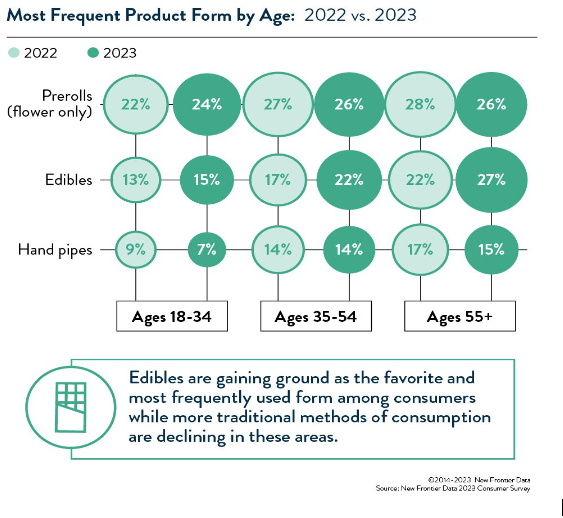
As a wave of policy shifts and growing societal acceptance sweeps across the land, a new era of standardized and properly labeled edibles has emerged, capturing the hearts and palates of consumers far and wide. Recent studies reveal that in 2022, a staggering 17% of consumers will identify edibles as their most frequently enjoyed form of cannabis, with an additional 22% declaring it their absolute favorite. These figures have risen triumphantly to 21% and 25%, respectively, in the year 2023, leaving cannabis flower trailing behind.

What factors have contributed to this captivating trend? Firstly, the stringent testing and labeling protocols applied to regulated products provide consumers with a sense of reassurance, ensuring that the edibles they consume precisely align with their stated contents. No longer must individuals navigate the perils of mysterious overdoses or unexpected psychedelic journeys. As a growing number of casual consumers join the cannabis community, they seek low-dose options, which are often elusive within the flower market, which predominantly features high-THC varieties. It is all about achieving the perfect equilibrium, you see.

Traditional edibles used to take an excruciatingly slow 1-2 hours to unleash their full effects. But in recent years, fast-acting edibles have emerged, promising a delightful onset within 10-15 minutes. This groundbreaking development has overcome the longstanding issue of dosing, making it particularly enticing for those looking to replace alcohol or prescription drugs with the enchantment of cannabis. Picture this: you find yourself amidst a gathering, surrounded by merry revelers partaking in spirits, and you do not wish to miss out on the fun. With fast-acting edibles, you can join the festivities without enduring the dreaded wait. Furthermore, for individuals seeking respite from pain or discomfort, every minute is valuable. Relief cannot arrive quickly enough, and now, finally, it can.

As cannabis garners acceptance and becomes a companion for outdoor adventures and shared experiences, the demand for products that are discreet, odorless, and free from smoke has surged. Imagine relishing a delectable gummy bear during your child’s softball game, effortlessly blending into the crowd while fellow parents remain blissfully unaware of your delightful indulgence. It represents a seamless integration of cannabis into everyday life, devoid of the telltale smoke and lingering fragrance. There is no need to light up a joint and attract unwarranted attention when one can simply enjoy a delicious treat inconspicuously. The convenience is unparalleled.

We are quickly entering an era of cannabis-friendly hotels, enchanting consumption lounges, and a multitude of opportunities for social cannabis consumption. As these magical destinations materialize, a question hangs in the air: Will they cater to the preferences of smoking aficionados, or will regulations surrounding public consumption amplify the dominance of edibles? Numerous states have already tightened their grip on public smoking, leaving edibles to ascend the throne of preference as the desire and comfort of consuming cannabis in public spaces grow. The allure of discreet consumption is irresistible, especially when indulging in the company of others who may not share the same affinity for the herb. Edibles, with their enticing flavors and inconspicuous nature, emerge as the champions of the social cannabis realm.

The transformation of a once-risky consumption method into an engrossing and secure experience is worth celebrating. The days of uncertain doses and perplexing dosing instructions are behind us. With standardized and properly labeled edibles at the forefront, consumers can embark on their cannabis journeys with confidence. The emergence of low-dose options and the advent of fast-acting edibles have revolutionized the landscape, catering to the desires of a diverse consumer base seeking convenience, control, and immediate relief. As cannabis becomes further integrated into our social fabric, edibles proudly stand as the ideal companions for discreet indulgence in public settings, providing a seamless and enjoyable experience for all.

The ongoing developments in cannabis edibles should allow more poeple to embrace the magic, savor the flavors, and allow the world of edibles to take them on a captivating voyage of exploration and delight. This is only the beginning of a truly exciting moment in the ever-evolving cannabis industry.

EXPLORE MORE NEWS

Major Corporations Investing in Cannabis

As cannabis legalization continues to spread across the country, major corporations are increasingly taking notice and investing in the industry. In April of 2023, a major beverage company announced a $100 million investment in a cannabis-infused drink startup, signaling the growing trend of large corporations entering the cannabis space.

The Changing Landscape of Cannabis Product and Sourcing Choices

According to the latest data from New Frontier, consumer behavior regarding the purchase of cannabis products is experiencing a notable shift. The data reveals that more consumers are opting to order their cannabis products from brick and mortar dispensaries, indicating a growing preference for in-person shopping experiences. In 2022, 34% of consumers chose physical dispensaries, and this figure has risen to 43% in 2023. Additionally, there has been a slight reduction in cannabis delivery, with 18% of consumers utilizing this option in 2022, which has decreased to 15% in 2023. This trend can be attributed to a post-COVID era where individuals feel more comfortable leaving their homes and seeking out physical retail experiences. In this article, we will explore the normalization of cannabis product and sourcing choices, and how these changes are shaping the industry.

New York Expands Legal Cannabis Industry and Cracks Down on Illegal Market

New York has initiated a major expansion of its legal cannabis industry by opening applications for hundreds of new marijuana business licenses. This move follows a slow start, with only about two dozen retailers operating since adult-use sales began last December. The application period will run until December 4, and licenses are expected to be awarded early next year.

Missouri Division of Cannabis Regulation Initiates Recall of 62,000 Cannabis Products: An In-Depth Look at the Delta Extraction Case and Industry Lessons

The Missouri Division of Cannabis Regulation (DCR) has recently taken a significant step in the cannabis industry by issuing a recall of more than 62,000 cannabis products manufactured by Delta Extraction, LLC. The reason behind this recall lies in the fact that these products were not being compliantly tracked in the statewide track and trace system known as METRC. This failure to adhere to tracking protocols created a situation where the DCR could not verify the origins of these products – whether they were sourced from marijuana cultivated within Missouri and had undergone the necessary testing procedures.

Newsletter