Texas Medical Cannabis – Market Statistics Update November 2023 (available on TexMed App – TexMedCannabis.com)

Texas Medical Cannabis – Market Statistics Update November 2023 (available on TexMed App – TexMedCannabis.com)

The Texas Department of Public Safety’s latest data for November 2023 provides an impactful snapshot into the state of Texas medical cannabis landscape. These statistics unveil a perspective on large patient and limited physician growth, as well as the current state of accessibility within the Lone Star State.

Patient Growth:
In November 2023, Texas witnessed an increase in registered patients, reaching a total of 70,835. This marks a notable 3% growth from the previous month, showcasing the state’s sustained momentum in medical cannabis sign ups. Comparing this figure to the same month in the previous year, the patient count has surged by an impressive 72%, indicating a robust upward trend in demand that has created the hockey stick shape below.
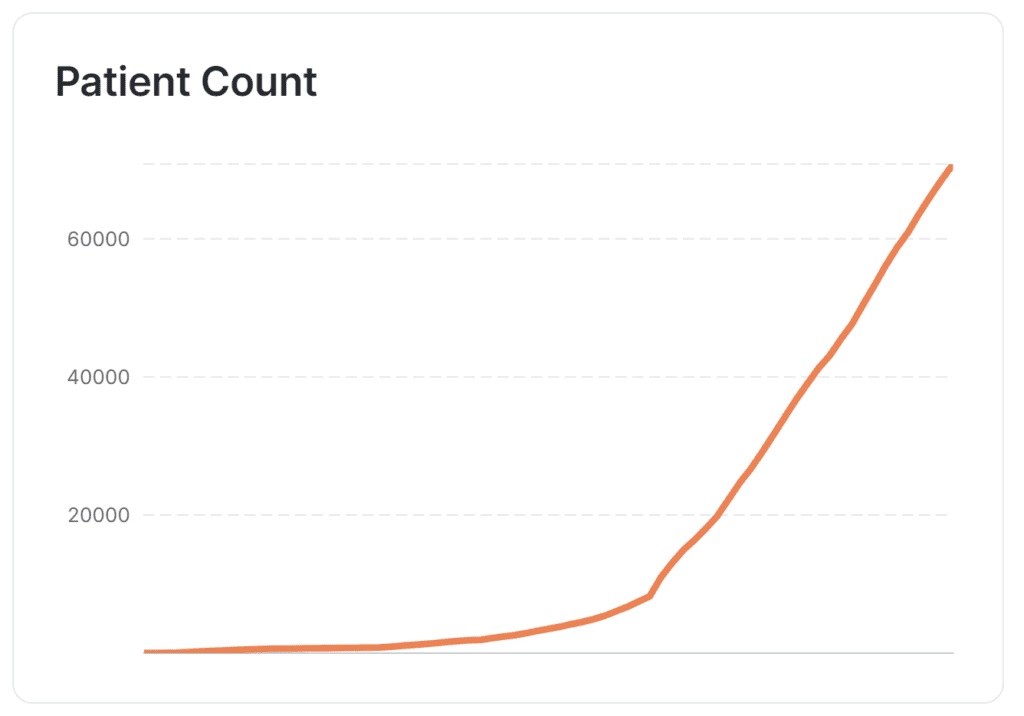
Texas Medical Cannabis Patient Count Nov 2023. TexMed by YesCannabis.

Physician Registration:
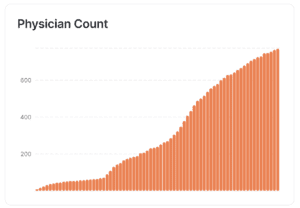
The state’s physicians that prescribe medical cannabis has also experienced growth, with 772 registered physicians documented in the latest November data. This represents a steady 1% increase from the previous month, reflecting ongoing engagement and interest among healthcare professionals. Over the past year, the number of registered physicians has seen a substantial 18% growth, indicating positive trends in attracting and retaining medical practitioners.
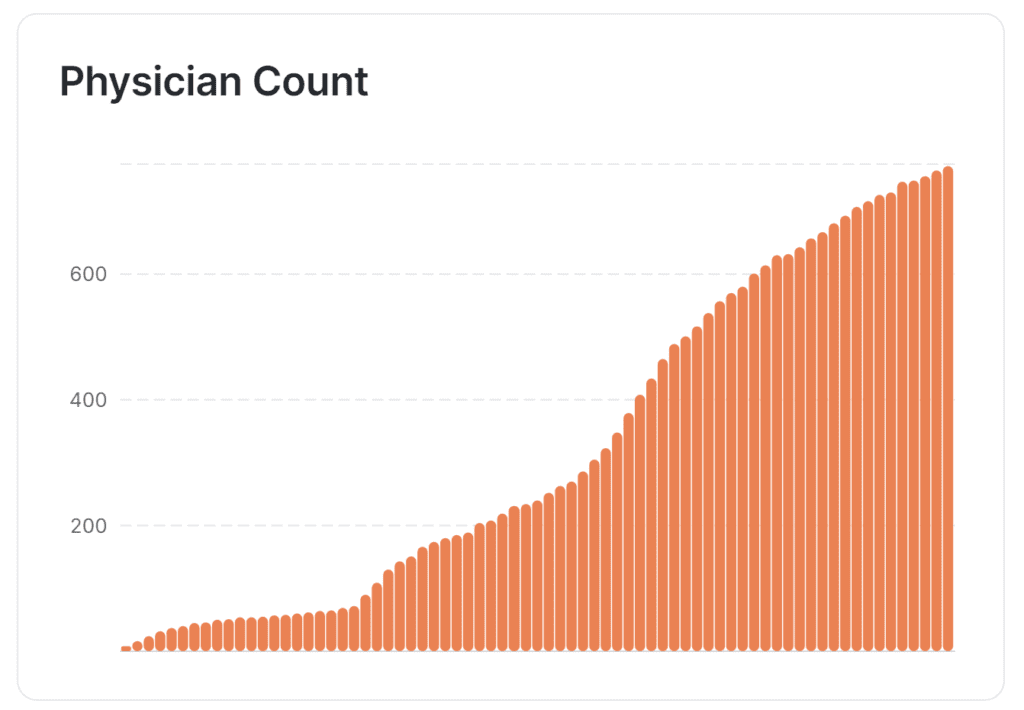
Texas Medical Cannabis Doctor Count. TexMed by YesCannabis.

Patient-to-Physician Ratio:
The patient-to-physician ratio currently stands at 92 patients per physician. This ratio has grown by 2% from the previous month, underscoring the increased demand for healthcare services. Over the past year, there has been a significant 46% growth in the patient-to-physician ratio, emphasizing the ongoing challenges in healthcare access and the importance of optimizing the distribution of medical resources.

Access to Medical Products:
A striking observation pertains to the limited access to medical products for the 70,835 registered patients. Presently, only three active companies facilitate access, with fewer than 30 locations available for patients who actively participate in the program. This highlights a significant gap in accessibility and emphasizes the pressing need for broader availability and increased options for patients to ensure comprehensive and effective healthcare delivery.

Relative Scale:
In a state as vast as Texas, boasting a population of 30,000,000, the 70,835 registered medical cannabis patients constitute only 0.2% of the total population. This statistic serves as a compelling reminder of the considerable potential for further expansion and development in the state’s medical cannabis program. The relatively low percentage underscores the opportunity to enhance outreach efforts, engage more residents, and address the healthcare needs of a larger portion of the population.

November 2023 data showcases positive trends in patient and physician growth, highlighting the need for ongoing efforts to enhance medical cannabis healthcare infrastructure, accessibility, and the availability of medical cannabis products in Texas.

Comparison with Florida Medical Market

Florida’s Growing Patient Count

At the end of 2022, Marijuana Policy Project (MPP) reported that Florida had 831,775 registered patients, making up 3.74% of the state’s population. This highlights the increasing acceptance of medical cannabis as a viable treatment option.

Extensive Dispensary Network

To cater to this demand, Florida has 501 active dispensaries, operated by 22 different companies, with more on the way. This shows the competitive nature of the industry and ensures patients have convenient access to their prescribed treatments.

Florida’s Medical Cannabis Program is thriving, with a significant patient count and a robust dispensary network, exemplifying the program’s success and the growing role of medical cannabis in the state’s healthcare landscape.


News on the latest application round

More than 130 applications have been submitted to the Texas Department of Public Safety for vertically integrated medical marijuana dispensaries, marking a significant response since the reopening of applications in January after a four-year hiatus.

Despite a recent bill to expand the state’s medical marijuana program stalling in the Senate, the DPS reports no current plans for usage law expansion, emphasizing their commitment to ensuring statewide access to low-THC cannabis for registered patients. For further details, visit KVUE.


Watch the TexMed APP launch video on YouTube

If you’re looking to stay in tune with the Texas Medical market, please check out TexMedCannabis.com

EXPLORE MORE NEWS

Major Corporations Investing in Cannabis

As cannabis legalization continues to spread across the country, major corporations are increasingly taking notice and investing in the industry. In April of 2023, a major beverage company announced a $100 million investment in a cannabis-infused drink startup, signaling the growing trend of large corporations entering the cannabis space.

Proposed Legislation Aims to Address Cannabis Taxation Issues in California

Under the Adult Use of Marijuana Act, the cannabis excise tax in California is currently set at 15% of gross receipts from licensed retail cannabis sales. In addition to this state-level tax, many local governments impose their own additional taxes on cannabis, with some jurisdictions, including Los Angeles, charging as high as 10%.

New York Regulators Grant First Adult-Use Cannabis Retail Licenses in Finger Lakes Region

In a historic move, regulators in New York have granted approval for the issuance of adult-use marijuana retail licenses, signaling a major breakthrough for the cannabis industry in the Finger Lakes region. This decision comes after years of advocacy and debate surrounding the legalization of marijuana. The state’s Cannabis Control Board recently announced the allocation of 36 new licenses throughout New York, including seven in the Finger Lakes area. However, the exact timeline for these license holders to commence operations remains uncertain, creating some uncertainty within the industry.

New Jersey’s Cannabis Tax Revenue Alleviates Violence with $5 Million for Prevention Efforts

In a remarkable step towards promoting community safety and well-being, New Jersey’s state program, initiated in 2021, continues to make strides by allocating $15 million to bolster Community-Based Violence Intervention (CBVI) programs. Governor Phil Murphy and Attorney General Matthew J. Platkin unveiled this groundbreaking initiative, which earmarks a portion of its funding from the cannabis tax revenue, aimed at supporting community-led organizations committed to violence prevention.

Newsletter

Texas Medical Cannabis – Market Statistics Update November 2023 (available on TexMed App – TexMedCannabis.com)

Texas Medical Cannabis – Market Statistics Update October 2023 (available on TexMed App – TexMedCannabis.com)

The Texas Department of Public Safety’s latest data for October 2023 provides an intriguing snapshot of the state’s healthcare landscape. These statistics unveil a nuanced perspective on patient and physician growth, as well as the current state of medical accessibility in the Lone Star State.

Patient Growth:
In October 2023, Texas witnessed an increase in registered patients, reaching a total of 68,611. This marks a notable 4% growth from the previous month, showcasing the state’s sustained momentum in healthcare utilization. Comparing this figure to the same month in the previous year, the patient count has surged by an impressive 76%, indicating a robust upward trend in healthcare engagement.

Physician Registration:
The state’s physician roster has also experienced growth, with 765 registered physicians documented in the latest data. This represents a steady 1% increase from the previous month, reflecting ongoing engagement and interest among healthcare professionals. Over the past year, the number of registered physicians has seen a substantial 19% growth, indicating positive trends in attracting and retaining medical practitioners.

Patient-to-Physician Ratio:
The patient-to-physician ratio currently stands at 90 patients per physician. This ratio has grown by 2% from the previous month, underscoring the increased demand for healthcare services. Over the past year, there has been a significant 48% growth in the patient-to-physician ratio, emphasizing the ongoing challenges in healthcare access and the importance of optimizing the distribution of medical resources.

Access to Medical Products:
A striking observation pertains to the limited access to medical products for the 68,611 registered patients. Presently, only three active companies facilitate access, with fewer than 30 locations available for patients who actively participate in the program. This highlights a significant gap in accessibility and emphasizes the pressing need for broader availability and increased options for patients to ensure comprehensive and effective healthcare delivery.

Relative Scale:
In a state as vast as Texas, boasting a population of 30,000,000, the 68,611 registered patients constitute only 0.22% of the total population. This statistic serves as a compelling reminder of the considerable potential for further expansion and development in the state’s medical program. The relatively low percentage underscores the opportunity to enhance outreach efforts, engage more residents, and address the healthcare needs of a larger portion of the population.

October 2023 data showcases positive trends in patient and physician growth, highlighting the need for ongoing efforts to enhance healthcare infrastructure, accessibility, and the availability of medical products in Texas.

Comparison with Florida Medical Market

Florida’s Growing Patient Count

At the end of 2022, Marijuana Policy Project (MPP) reported that Florida had 831,775 registered patients, making up 3.74% of the state’s population. This highlights the increasing acceptance of medical cannabis as a viable treatment option.

Extensive Dispensary Network

To cater to this demand, Florida has 501 active dispensaries, operated by 22 different companies. This shows the competitive nature of the industry and ensures patients have convenient access to their prescribed treatments.

Florida’s Medical Cannabis Program is thriving, with a significant patient count and a robust dispensary network, exemplifying the program’s success and the growing role of medical cannabis in the state’s healthcare landscape.


News on the latest application round

More than 130 applications have been submitted to the Texas Department of Public Safety for medical marijuana dispensaries, marking a significant response since the reopening of applications in January after a four-year hiatus.

Despite a recent bill to expand the state’s medical marijuana program stalling in the Senate, the DPS reports no current plans for usage law expansion, emphasizing their commitment to ensuring statewide access to low-THC cannabis for registered patients. For further details, visit KVUE.


Watch the TexMed APP launch video on YouTube

If you’re looking to stay in tune with the Texas Medical market, please check out TexMedCannabis.com

EXPLORE MORE NEWS

Major Corporations Investing in Cannabis

As cannabis legalization continues to spread across the country, major corporations are increasingly taking notice and investing in the industry. In April of 2023, a major beverage company announced a $100 million investment in a cannabis-infused drink startup, signaling the growing trend of large corporations entering the cannabis space.

Cannabis Growers in Arizona: Nurturing the Green Industry

The legalization of cannabis for medicinal and recreational use has opened up new opportunities for entrepreneurs and cultivators across the United States. One state that has experienced a significant shift in its cannabis industry is Arizona. With the passing of Proposition 207 in 2020, which legalized recreational marijuana, the demand for cannabis products has surged, leading to a flourishing market. This article delves into the world of cannabis growers in Arizona, exploring the cultivation process, economic impact, regulations, and the challenges and opportunities that arise in this dynamic industry.

Cannabis Delivery Services: Bringing Accessibility to Cannabis Enthusiasts Across the US

Legalizing cannabis in the United States has opened doors to new possibilities for consumers, but accessibility remains a concern for many. For some, reaching a dispensary can be challenging due to transportation limitations, health issues, or the need for childcare. In response to these challenges, cannabis delivery services have emerged as a godsend for those seeking a convenient and hassle-free way to access their favorite products.

The Cannabis Boom: How America’s Love for the Plant is Reshaping Markets

Cannabis once shrouded in controversy and legal restrictions, has now firmly entrenched itself in the mainstream American consumer landscape. The plant that was once relegated to underground markets is now a thriving industry, with Americans showing an insatiable appetite for legal cannabis products. According to a recent comprehensive report from MJBizDaily, a prominent cannabis industry publication, Americans spent a staggering $30 billion on legal cannabis products in 2022 alone. This astronomical figure not only reflects the plant’s widespread acceptance but also surpasses the combined sales of beloved staples like chocolate and craft beer, which amounted to $20 billion and $7.9 billion, respectively.

Newsletter

Ohio Joins Ranks of Legal Cannabis States as Issue 2 Passes with 57% Voter Approval

Ohio Joins Ranks of Legal Cannabis States as Issue 2 Passes with 57% Voter Approval

In a groundbreaking decision, Ohio has officially become the 24th state to legalize adult-use cannabis. With a resounding 57% of voters supporting the ballot proposal known as Issue 2, this victory marks a significant shift in the landscape of U.S. states where recreational marijuana is legal. This landmark decision paves the way for individuals aged 21 and older to purchase and possess up to 2.5 ounces of cannabis while also permitting home cultivation of up to six plants per person and 12 plants per residence if at least two adults reside there. Furthermore, a 10% tax will be levied on cannabis purchases, with the revenue allocated to cover administrative costs, addiction treatment programs, municipalities with dispensaries, and social equity initiatives and job programs.

The passing of Issue 2 signifies that the United States is just one state away from having adult-use cannabis legalized in half of the states. The National Organization for the Reform of Marijuana Laws (NORML) notes that the legal cannabis movement has already reached a tipping point in terms of population, marking a significant milestone in the ongoing process of loosening cannabis laws in the country. NORML Deputy Director Paul Armentano emphasized, “Today, for the first time since the federal government initiated federal cannabis prohibition in 1937, more people live in a place where marijuana is state-legal than reside somewhere where it isn’t. It borders on political malpractice for elected officials, and for Republican lawmakers especially, to sit on the sidelines at a time when more Americans than ever are demanding action.”

However, it’s worth noting that not all parties were in favor of this progressive change. Republican Governor Mike DeWine voiced his opposition to the measure, and the GOP-led Ohio Senate passed a resolution encouraging voters to reject the initiative, albeit unsuccessfully. Senate President Matt Huffman has expressed his intent to “revisit” provisions of the new law, hinting at possible legislative changes and even a repeal of the adult-use provisions.

Despite these efforts, the outcome of the vote clearly favored those supporting legal cannabis. According to the New York Times election results tracker, 57% of voters approved Issue 2, while only 43% opposed it.

The passage of Issue 2 was not entirely unexpected, as it was driven by the Coalition to Regulate Marijuana Like Alcohol. Prior to the vote, the organization managed to raise more than three times the funding amassed by the opposition group, Protect Ohio Workers and Families.

Businesses across Ohio are now gearing up to embrace the new adult-use cannabis law. NORML predicts that retail cannabis products will be subject to a 10% tax, with anticipated annual tax revenue ranging from $276.2 million to $403.6 million by the fifth year of sales. An additional analysis estimates that the law will create 3,300 new jobs within the first year of legalization.

Various figures within the cannabis industry have expressed their support for this groundbreaking decision in Ohio. Ben Kovler, CEO of Green Thumb Industries, highlighted the historic significance of the vote, saying, “Today marks another historic moment for the cannabis industry and for Ohio, as voters have chosen to end Prohibition 2.0 in the Buckeye State. This vote is not just about legalization; it’s a recognition that Americans are continuing to embrace cannabis for well-being.”

LeafLink, a company operating in 30 markets across the U.S., including Ohio, commended the decision, noting that the legalization of adult-use cannabis in Ohio presents a remarkable opportunity for the state. Rodney Holcombe, LeafLink’s Director of Policy, stated, “This vote presents a tremendous opportunity for the state where legal adult-use sales are projected to exceed $1 billion annually. We have witnessed firsthand the positive impact of legalized cannabis, including job creation, tax revenue for vital government services, and unique business opportunities for entrepreneurs. We urge Ohio officials to promptly enact the law, allowing their constituents to reap these benefits without delay.”

Timeless, a company specializing in concentrates in Ohio, also celebrated the outcome. Joshua Hirschey, President at Timeless Refinery, emphasized the potential economic benefits for the state, stating, “The vote to legalize cannabis in Ohio is a huge win for consumers who have let their voices be heard, as well as a win for the state with the potential to bring in $260M in additional tax revenue, and for operators like Timeless who will be able to serve a wider demographic.”

BDSA, a leading provider of market intelligence for the cannabis industry, expressed its commitment to providing insights for the evolving Ohio cannabis market. Roy Bingham, co-founder and CEO of BDSA, highlighted Ohio’s emerging importance in the cannabis industry, citing the state’s unique regulatory environment and growing acceptance of medical cannabis.

In addition to the legalization of adult-use cannabis, Issue 1, Ohio’s bill designed to protect the right to abortion, was also approved. Provisions in the cannabis law allowing the possession and home cultivation of marijuana by adults will take effect on December 7th, ushering in a new era for cannabis enthusiasts in Ohio.

Source: High Times

EXPLORE MORE NEWS

Major Corporations Investing in Cannabis

As cannabis legalization continues to spread across the country, major corporations are increasingly taking notice and investing in the industry. In April of 2023, a major beverage company announced a $100 million investment in a cannabis-infused drink startup, signaling the growing trend of large corporations entering the cannabis space.

Cannabis Growers in Arizona: Nurturing the Green Industry

The legalization of cannabis for medicinal and recreational use has opened up new opportunities for entrepreneurs and cultivators across the United States. One state that has experienced a significant shift in its cannabis industry is Arizona. With the passing of Proposition 207 in 2020, which legalized recreational marijuana, the demand for cannabis products has surged, leading to a flourishing market. This article delves into the world of cannabis growers in Arizona, exploring the cultivation process, economic impact, regulations, and the challenges and opportunities that arise in this dynamic industry.

South Dakota’s Medical Cannabis Program Surpasses Expectations, Raises Concerns

South Dakota’s foray into medical cannabis has far exceeded its initial projections, with the issuance of medical cannabis cards doubling the expected numbers. Since the program’s launch in 2021, the South Dakota Department of Health has issued approximately 11,500 medical cannabis cards, significantly surpassing the original projection of 6,000 cards to be issued by 2024.

Here is a map of all the cannabis stores in Delaware 2023

The legalization of recreational cannabis has been a groundbreaking journey for many states across the United States, and Delaware is no exception. As the First State takes progressive steps towards regulating the use of cannabis for recreational purposes, it’s crucial to understand the legislation, background, and the evolving legal framework. In this blog, we will delve into the intricacies of Delaware’s cannabis legalization program, highlighting key regulations and recent changes. We will also explore why knowing dispensary locations is vital for both consumers and the community.

Newsletter

Historic Milestone: Georgia Becomes First State to Allow Medical Cannabis Sales in Hundreds of Pharmacies

Historic Milestone: Georgia Becomes First State to Allow Medical Cannabis Sales in Hundreds of Pharmacies

In a groundbreaking development, the Georgia Board of Pharmacy has opened its doors to applications from nearly 120 pharmacies looking to provide medical marijuana products. This historic move makes Georgia the first state in the nation to permit the sale of low-dose cannabis within independent drug stores.

The implementation of the pharmacy rule, which extends medical marijuana sales to drug stores, promises to significantly enhance patient access. Up until now, the state has been served by only seven dispensaries, leaving patients with conditions such as Parkinson’s disease, seizures, terminal cancers, and PTSD with limited options.

The exclusive suppliers for these pharmacies will be the state’s only two licensed cannabis producers: Botanical Sciences LLC and Trulieve Cannabis Corp. These two companies were the first to receive approval earlier this year to cater to registered medical cannabis patients in Georgia.

Gary Long, CEO of Botanical Sciences, expressed his enthusiasm for this development, stating, “Pharmacists have been fielding questions from patients for years without ever having the ability to do anything about it. Finally, they have the ability not just to give people advice but provide them with the therapies they’ve been seeking.”

Georgia boasts more than 400 independent pharmacies, and the majority of them are expected to participate in this program. National chains such as CVS and Walgreens are the notable exceptions, as confirmed by Cecil Cordle, a member of the Georgia Board of Pharmacy.

This initiative is poised to bring convenience to the lives of Georgians, with approximately 90 percent of the state’s population residing within a 30-minute drive of a pharmacy offering medical marijuana products, according to reports.

Andrew Turnage, executive director for the Georgia Access to Medical Cannabis Commission, hailed the pharmacy rule as “definitely big news” and emphasized its benefits for both licensees and, most importantly, patients. He remarked, “It will put access in virtually every county in the state.”

Addressing the number of medical marijuana patients in Georgia, a recent revelation by the Georgia Department of Public Health stirred up some controversy. It was disclosed that the department had miscounted and overstated the count of registered medical marijuana patients. The accurate figure currently stands at just 14,000 active patients and caregivers, a far cry from the previously reported 50,000.

Source: Benzinga

EXPLORE MORE NEWS

Major Corporations Investing in Cannabis

As cannabis legalization continues to spread across the country, major corporations are increasingly taking notice and investing in the industry. In April of 2023, a major beverage company announced a $100 million investment in a cannabis-infused drink startup, signaling the growing trend of large corporations entering the cannabis space.

Texas Medical Cannabis – Market Statistics Update October 2023 (available on TexMed App – TexMedCannabis.com)

The Texas Department of Public Safety’s latest data for September 2023 provides an intriguing snapshot of the state’s healthcare landscape. These statistics unveil a nuanced perspective on patient and physician growth, as well as the current state of medical accessibility in the Lone Star State.

Republican Resistance Blocks Medical Cannabis Legalization Push in North Carolina

Republican resistance has effectively halted the push for medical cannabis legalization in North Carolina. State House Speaker Tim Moore believes that the opposition from Republican lawmakers has doomed the prospects of passing the Compassionate Care Act in 2023. Despite the state Senate’s approval of the bill, which aimed to provide access to smokable flower for patients with 15 qualifying medical conditions in a tightly regulated market, the House took no further action beyond a committee hearing.

Nevada’s Cannabis Industry Undergoes Sweeping Reforms: A Look at Senate Bill 277

Global Cannabis Times recently reported that Nevada’s cannabis industry is on the brink of a major transformation following the recent passing of Senate Bill 277, a game-changing piece of legislation that promises to shape the future of recreational and medicinal marijuana in the state. Effective January 1, 2024, this bill brings a series of substantial changes, all aimed at enhancing customer experience, facilitating business operations, and promoting social equity within the cannabis sector.

Newsletter

New York Expands Legal Cannabis Industry and Cracks Down on Illegal Market

New York Expands Legal Cannabis Industry and Cracks Down on Illegal Market

New York has initiated a major expansion of its legal cannabis industry by opening applications for hundreds of new marijuana business licenses. This move follows a slow start, with only about two dozen retailers operating since adult-use sales began last December. The application period will run until December 4, and licenses are expected to be awarded early next year.

Governor Kathy Hochul announced this new application period while emphasizing her administration’s commitment to combating unlicensed marijuana businesses that have proliferated due to delays in the state’s legal rollout. The goal is to accelerate New York’s shift from the underground cannabis market to regulated retailers.

Governor Hochul anticipates a large number of license applicants, aiming for over 1,000 legal cannabis shops within the next year. Simultaneously, the Department of Small Business Services in New York City has launched an educational program for cannabis entrepreneurs, offering training and advice from industry leaders through the “FastTrac” program, with applications open until October 18.

Governor Hochul estimated that over 2,000 illegal marijuana stores currently operate in the state, with a significant concentration in New York City. Legal challenges and a slow regulatory process have contributed to this proliferation. However, the governor expressed optimism about overcoming these challenges and achieving a smoother process by the end of the year.

In addition to expanding licenses, New York is intensifying law enforcement efforts against illegal cannabis sellers. Governor Hochul and State Attorney General Letitia James stressed the importance of supporting small businesses and rectifying the harms caused by the “war on drugs.”

Regulatory authorities and lawmakers are actively seeking input to address challenges in the legal cannabis industry, with a focus on social equity and small business opportunities. While there have been some controversial regulatory changes, efforts are underway to expedite consumer access to legal cannabis and provide alternative markets for surplus products from growers.

New York’s efforts to expand its legal cannabis industry and combat the illegal market are progressing. The state aims to transition to a well-regulated industry while prioritizing social equity and small businesses. Challenges remain, and ongoing regulatory adjustments and public input will shape the future of New York’s cannabis industry.

Source: Marijuana Moment

EXPLORE MORE NEWS

Major Corporations Investing in Cannabis

As cannabis legalization continues to spread across the country, major corporations are increasingly taking notice and investing in the industry. In April of 2023, a major beverage company announced a $100 million investment in a cannabis-infused drink startup, signaling the growing trend of large corporations entering the cannabis space.

10 Gift Ideas for Cannabis Enthusiasts

Slowly but surely, state by state, the U.S. is continuing to embrace cannabis. With the increasing number of states legalizing or decriminalizing weed, the market for innovative cannabis products is growing rapidly. Need a great gift idea? Why not upgrade the experience for your cannabis-friendly friends with some high-tech gifts designed specifically for cannabis users? From consumption devices to storage containers, here are nine cutting-edge gift ideas from startups and established companies that are making a mark in this booming industry.

The origins of 420 and why it continues to be a day of celebration for cannabis enthusiasts worldwide

April 20th, 4/20, or 4:20 on the clock, has become a celebrated day and time in cannabis culture. People around the world gather to enjoy cannabis products and advocate for the legalization of marijuana. But how did this date and time become so significant?

State-Level Tax Relief Provides Welcome Respite for U.S. Cannabis Industry

The U.S. cannabis industry is finally experiencing some much-needed tax relief as an increasing number of states pass laws to exempt businesses from Section 280E of the federal tax code. With 20 states having implemented these exemptions, cannabis operators are beginning to see a glimmer of hope amidst the burdensome tax landscape.

Newsletter

Cannabis Companies Launch Lawsuit Against Attorney General to Challenge Federal Prohibition

Cannabis Companies Launch Lawsuit Against Attorney General to Challenge Federal Prohibition

A coalition of cannabis businesses, represented by a prominent law firm, has initiated a long-awaited legal action against the U.S. attorney general. Their goal is to prevent the federal government from enforcing cannabis prohibition in states where it’s been legalized. These companies argue that maintaining prohibition in state-regulated markets is unconstitutional, endangering public safety and preventing licensed cannabis businesses from accessing essential financial services and tax benefits available to other industries.

The lawsuit was formally filed in the U.S. District Court for the District of Massachusetts, Western Division. It was brought forward by Verano Holdings Corp., a multi-state operator, alongside Massachusetts-based cannabis companies, Canna Provisions and Wiseacre Farm, and Treevit CEO Gyasi Sellers. Notably, Ascend Wellness Holdings, TerrAscend, Green Thumb Industries, Eminence Capital, and Poseidon Investment Management are “foundational supporters” of this legal challenge.

The plaintiffs are being represented by the law firms Boies Schiller Flexner and Lesser, Newman, Aleo & Nasser LLP. David Boies, the chairman of the former firm, has represented clients such as the Justice Department, former Vice President Al Gore, and parties involved in the case that led to the overturning of California’s same-sex marriage ban.

The lawsuit contends that while Congress originally implemented a cannabis ban through the Controlled Substances Act (CSA) to curb interstate commerce, which ostensibly gave the federal government a legal basis to enforce prohibition at the state level, lawmakers and the executive branch have since abandoned that mission as more states have embraced cannabis legalization.

The complaint argues, “Despite these changes, the federal criminal prohibition on intrastate cannabis remains in place, an unjustified vestige of a long-abandoned policy. This unjustified intrusion of federal power harms Plaintiffs, threatens the communities they serve, and lacks any rational purpose.”

The lawsuit highlights that even though the federal government has adopted a largely hands-off approach to cannabis in recent years, state-licensed cannabis businesses continue to face unique financial challenges. These include a lack of access to banking services, credit cards, and federal tax deductions, specifically under IRS code 280E. Because of these limitations, state-regulated cannabis businesses are forced to rely heavily on cash, leading to significant public safety risks and making them targets for robberies.

The lawsuit further argues that the existing federal ban on cannabis, as outlined in the CSA, constitutes an unconstitutional encroachment on state sovereignty. It contends that Congress has the authority to regulate cannabis in interstate commerce but lacks the constitutional power to regulate it when it’s grown, transported, and distributed intrastate.

The lawsuit delves into the history of cannabis laws in the United States, highlighting that prohibition is a relatively recent policy shift following over a century of legal use and cultivation to some extent. It also points out that the original justification for banning cannabis under the CSA, aimed at preventing interstate commerce, no longer applies.

The legal action is taking place as the Drug Enforcement Administration (DEA) reviews cannabis scheduling following a recommendation by the U.S. Department of Health and Human Services (HHS) to move cannabis from Schedule I to Schedule III under the CSA. While rescheduling could address certain tax-related issues for the industry, it wouldn’t fully legalize cannabis or permit intrastate commerce.

This lawsuit is significant for the cannabis industry, particularly for smaller businesses that have suffered from the unequal treatment and financial burdens caused by the federal government’s policies. The plaintiffs hope to set a new precedent that will allow states to regulate and support cannabis businesses under their own guidelines. The legal battle is expected to proceed, with the possibility of reaching the Supreme Court in the near future, potentially leading to a permanent change in how the federal government handles cannabis.

Source: Marijuana Moment

EXPLORE MORE NEWS

Major Corporations Investing in Cannabis

As cannabis legalization continues to spread across the country, major corporations are increasingly taking notice and investing in the industry. In April of 2023, a major beverage company announced a $100 million investment in a cannabis-infused drink startup, signaling the growing trend of large corporations entering the cannabis space.

Exploring Cannabis Consumer Archetypes in America: Trends and Insights for 2023

New Frontier Data presents the 2023 archetypes of cannabis consumers in America. The report highlights nine consumer archetypes based on the latest consumer survey data. The first archetype is Savvy Connoisseurs, comprising 13% of consumers. They are heavy cannabis users who consume it multiple times a day for various medical and recreational purposes. They obtain cannabis from both legal sources like dispensaries and informal channels such as friends or illicit dealers. Savvy Connoisseurs are the highest spenders and often purchase cannabis weekly.

A Historic Cannabis Banking Bill Advances to the Senate Floor

In a groundbreaking move, the Senate Banking Committee has approved the Secure and Fair Enforcement Regulation (SAFER) Banking Act, which seeks to bridge the gap between financial institutions and cannabis companies. This legislation, designed to end the cash-only transactions plaguing the industry, is now headed to the Senate floor after years of committee revisions and discussions.

State-Level Tax Relief Provides Welcome Respite for U.S. Cannabis Industry

The U.S. cannabis industry is finally experiencing some much-needed tax relief as an increasing number of states pass laws to exempt businesses from Section 280E of the federal tax code. With 20 states having implemented these exemptions, cannabis operators are beginning to see a glimmer of hope amidst the burdensome tax landscape.

Newsletter