Market Research Reveals High Brand Potential for Hooga Gummies

Market Research Reveals High Brand Potential for Hooga Gummies
Market research is an essential tool for gauging the potential of a brand in any new marketplace. Few brands in the cannabis industry have the wherewithal to conduct market research on emerging products, some due to experience, some due to the availability/access to reach consumers, others may not see its utility in their launch plan.

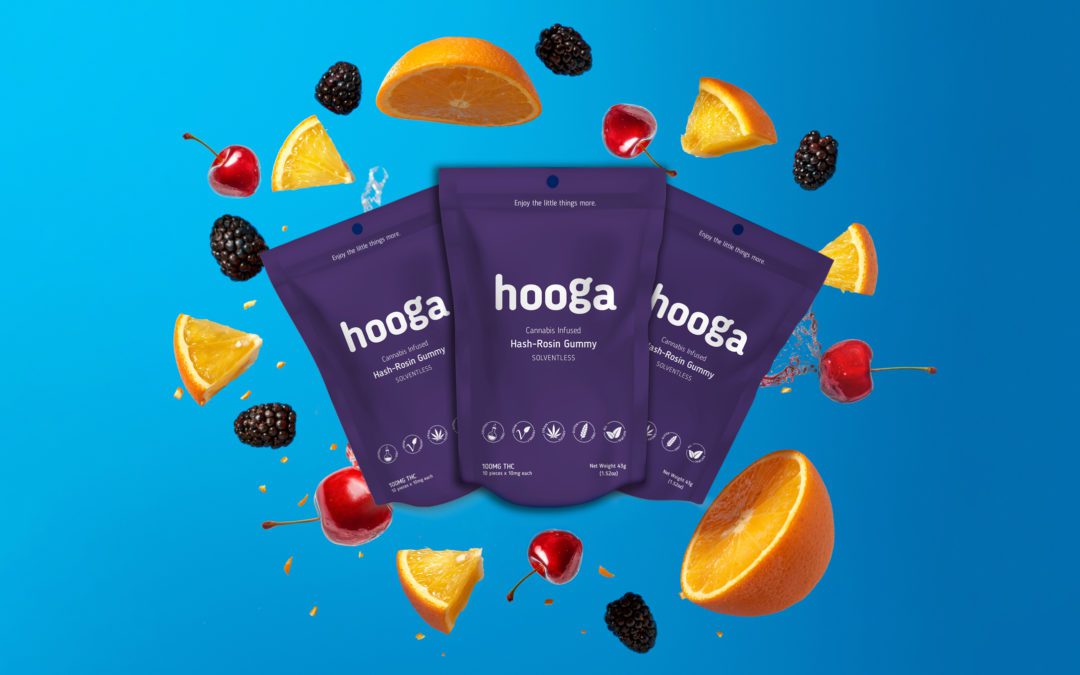
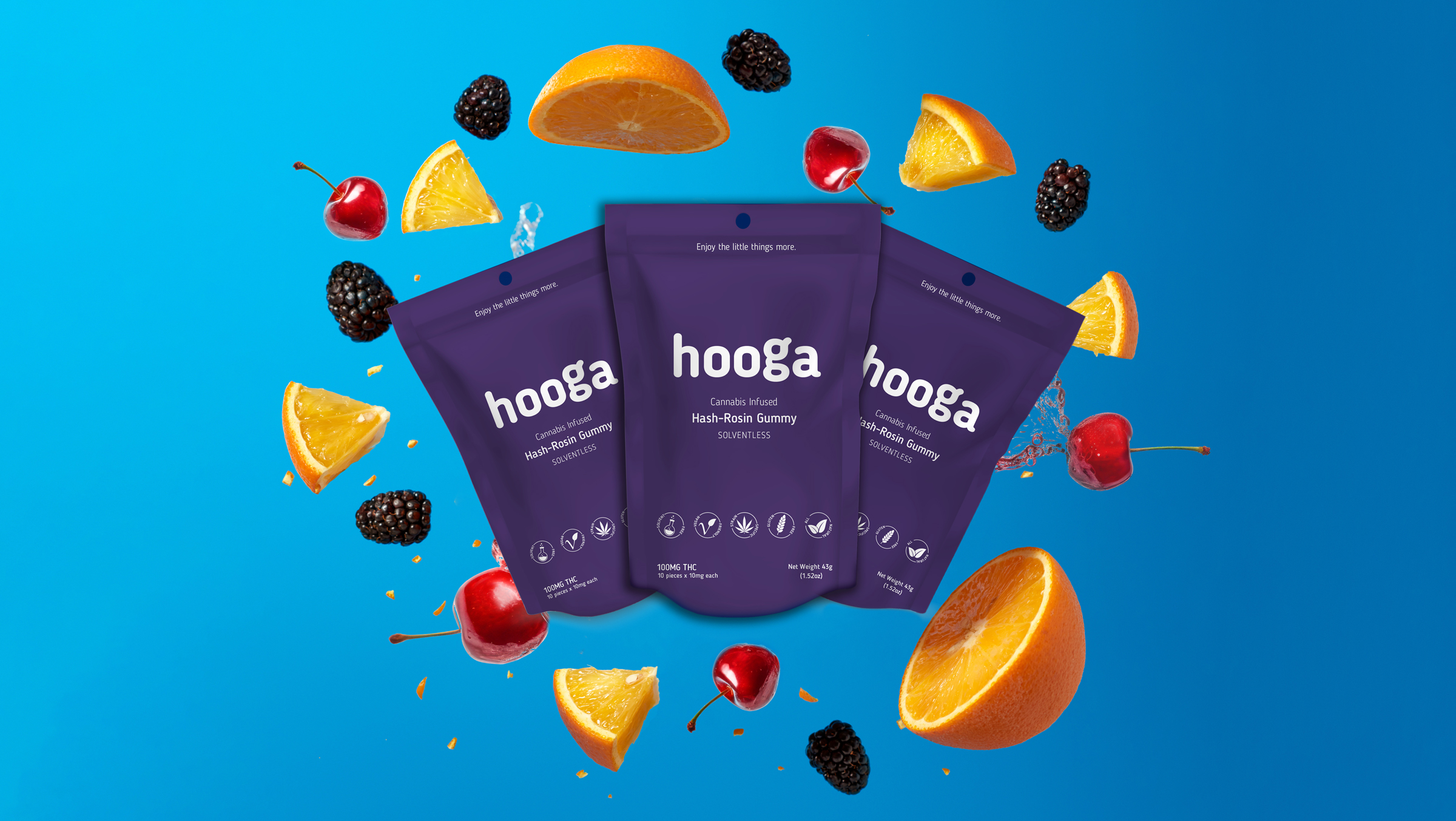
Recently, Hooga, a brand on Yes Platform, conducted an organic (non-incentivized) market research effort that showed promising results for the brand’s latest line of solventless rosin-infused, single-strain gummies. Market research was intended and orchestrated to identify public opinion on Hooga’s product, especially among those unfamiliar with the brand.

Key Findings:

Brand Loyalty: A substantial 74% of respondents indicated that they would buy the product again. This is an impressive number, especially considering that a large portion of these respondents were new to the product.

Packaging Appeal: The packaging seems to be doing its job well. A majority (over 50%) of the respondents said they liked the packaging.

Brand Awareness vs. Brand Trial: A notable finding was that while 88% of respondents were unaware of Hooga before trying the gummies, 83% of them had never actually tried the product. This construct could point to potential issues in brand recall or visibility in the market, or simply a quirk in the sample group that could get refined on another iteration.

Recommendation Ratings: The power of word-of-mouth cannot be underestimated. 46% of the participants gave the product a top recommendation rating of 5, while around 80% rated it at 4 or 5.

Net Promoter Score (NPS): The Hooga brand currently boasts a NPS of 25 for its gummy line. 

For those unfamiliar with NPS, it’s a metric used to gauge customer loyalty and satisfaction. This score is on a scale of -100 to 100, with scores of 0 being neutral and anything positive indicating more promoters than detractors. To give this context, while scores vary across industries, most companies average an NPS between 0-39. As a reference, internet and TV providers often have an NPS score of 0, while a brand like Netflix boasts a score of 64.

The technique of calculating NPS can be found here.

Customer Testimonials:

Direct feedback from customers can often paint a clearer picture than mere statistics, for Hooga gummy line, consumers have shared the following messages:

  • “Hoogas are great. Would recommend. Good flavor and effects.”
  • “Really great flavor and texture.”
  • “Very tasty. The sugar coating is just enough and doesn’t hurt your teeth.”
  • “Love the single strain hash rosin.”

In Conclusion:

Hooga’s gummies have resonated well with the market, indicating strong potential for organic growth. The brand seems to have a favorable mix of product quality, packaging appeal, and customer satisfaction. While there’s always room for improvement, the current feedback suggests that Hooga is on the right path. The positive reception, especially among new customers, bodes well for future brand expansions and campaigns.

Interested in learning more about your brand and fit in the cannabis industry? CONTACT US for more details.

EXPLORE MORE NEWS
Major Corporations Investing in Cannabis

As cannabis legalization continues to spread across the country, major corporations are increasingly taking notice and investing in the industry. In April of 2023, a major beverage company announced a $100 million investment in a cannabis-infused drink startup, signaling the growing trend of large corporations entering the cannabis space.

The Cannabis Boom: How America’s Love for the Plant is Reshaping Markets

Cannabis once shrouded in controversy and legal restrictions, has now firmly entrenched itself in the mainstream American consumer landscape. The plant that was once relegated to underground markets is now a thriving industry, with Americans showing an insatiable appetite for legal cannabis products. According to a recent comprehensive report from MJBizDaily, a prominent cannabis industry publication, Americans spent a staggering $30 billion on legal cannabis products in 2022 alone. This astronomical figure not only reflects the plant’s widespread acceptance but also surpasses the combined sales of beloved staples like chocolate and craft beer, which amounted to $20 billion and $7.9 billion, respectively.

New Jersey’s Cannabis Tax Revenue Alleviates Violence with $5 Million for Prevention Efforts

In a remarkable step towards promoting community safety and well-being, New Jersey’s state program, initiated in 2021, continues to make strides by allocating $15 million to bolster Community-Based Violence Intervention (CBVI) programs. Governor Phil Murphy and Attorney General Matthew J. Platkin unveiled this groundbreaking initiative, which earmarks a portion of its funding from the cannabis tax revenue, aimed at supporting community-led organizations committed to violence prevention.

Here is a map of all the cannabis stores in New Jersey 2023

The state of New Jersey has always been at the forefront of progressive changes, and with the legalization of recreational cannabis, it has taken another step towards pioneering new paths. As the Garden State embraces a budding industry, it is crucial for residents and entrepreneurs alike to understand the cannabis shop landscape in New Jersey.

Newsletter

Cannabis Acceptance Surges Despite the Growing Illicit Market

Cannabis Acceptance Surges Despite the Growing Illicit Market

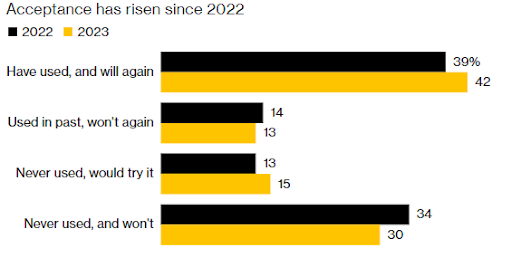
In a more current assessment, recent research suggests that the public’s embrace of cannabis is steadily increasing, even as the illicit market maintains its presence. This study, conducted by New Frontier Data, a prominent cannabis consulting firm, involved surveys of nearly 4,400 cannabis consumers and 1,200 nonusers across the United States. The findings reveal a noteworthy surge in acceptance and consumption of cannabis over the past year.

Despite the persistent financial and regulatory hurdles faced by the US cannabis industry, consumer attitudes towards cannabis remain overwhelmingly positive. The study demonstrates that a growing number of individuals are not only admitting to past cannabis use but also indicating their intention to use it again in the future. Approximately 42% of US consumers now fall into this category, compared to 39% a year ago. Conversely, the group of staunch cannabis skeptics has been shrinking, with only 30% stating that they had never used cannabis and had no plans to do so, down from 34% in the previous year. Moreover, a rising percentage of individuals are expressing willingness to experiment with cannabis for the first time, with only 13% firmly declaring that they would never use it again, a slight decrease from the figures in 2022.

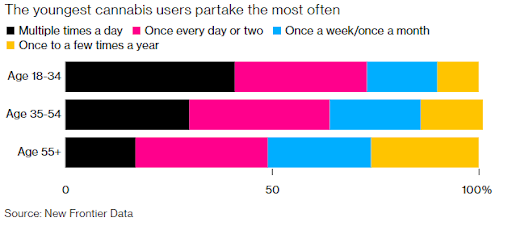
The data gleaned from this survey paints a picture of an increasingly cannabis-friendly US consumer base. Of particular interest is the revelation that 31% of cannabis consumers report using it multiple times a day. Among the 18 to 34 age group, this trend is even more pronounced, with 41% consuming cannabis multiple times daily. Although these percentages have slightly dipped compared to the previous year (36% and 46%, respectively), there is no sign of waning popularity for cannabis. As more states legalize its use, the cannabis industry is predicted to experience a 17% growth, reaching an estimated $34 billion in sales in 2023, as projected by New Frontier Data.

Interestingly, the study uncovers a growing acceptance of cannabis even in the face of unmet expectations regarding cannabis legalization. The initial goal of implementing state-licensed sales was to establish a secure supply chain, mitigate health risks, and dismantle the organized crime networks associated with the illicit market. However, contrary to these intentions, underground cannabis sales have continued to grow in recent years, reaching an estimated $77 billion in 2022, up from $70 billion in 2020, according to New Frontier Data’s estimates.

Nonetheless, the report does anticipate a decline in the illicit cannabis market, projecting it to be around $73 billion in 2023. In parallel, the legal cannabis market is anticipated to exhibit steady growth in the coming years, albeit with a modest decline in the illicit market.

Contrary to earlier hopes that cannabis would supplant alcohol use, the study reveals that cannabis users are more likely to consume alcohol and do so more frequently. While only 21% of cannabis nonusers report drinking alcohol a few times a week, the report finds that 34% of cannabis users consume alcohol with the same frequency.

Despite these positive trends and projections, cannabis stocks have faced a downturn in recent years, primarily due to the lack of significant progress toward federal legalization. While an increasing number of states are moving to legalize cannabis, federal lawmakers have grappled with reaching a consensus on legislation that would provide the industry with broader access to financial services or lead to full federal legalization. President Joe Biden’s call for a review of cannabis’s classification has also contributed to the uncertainty surrounding the industry’s future.

In conclusion, the latest study underscores the growing acceptance of cannabis among the public, with more individuals using it and expressing openness toward its use. Nevertheless, the illicit market remains a formidable challenge for the legal cannabis industry. The future of federal cannabis legalization remains uncertain, exerting an impact on the performance of cannabis-related stocks in recent years.

Source: Bloomberg

EXPLORE MORE NEWS

Major Corporations Investing in Cannabis

As cannabis legalization continues to spread across the country, major corporations are increasingly taking notice and investing in the industry. In April of 2023, a major beverage company announced a $100 million investment in a cannabis-infused drink startup, signaling the growing trend of large corporations entering the cannabis space.

Cultivating Sustainability: Harnessing Solar Power for a Greener Cannabis Industry

In the quest for sustainability, the cannabis industry has emerged as an unlikely candidate for the adoption of solar power solutions. The cannabis cultivation sector, driven primarily by indoor growing facilities, has historically been associated with high energy consumption and significant carbon footprints. However, as the industry matures and faces mounting pressure to reduce its environmental impact, solar power is increasingly being recognized as a game-changer in the pursuit of greener, more sustainable cannabis production.

Cannabis Infused Beverages Are On The Rise

Cannabis consumption is no longer limited to smoking or edibles. In recent years, the industry has seen the rise of cannabis-infused beverages as a new way for consumers to enjoy the benefits of cannabis. These drinks come in various forms such as sodas, teas, beers, and even wines. With their discreet nature and easy consumption, cannabis-infused beverages have become increasingly popular among cannabis consumers.

Texas Medical Cannabis – Market Statistics Update October 2023 (available on TexMed App – TexMedCannabis.com)

The Texas Department of Public Safety’s latest data for September 2023 provides an intriguing snapshot of the state’s healthcare landscape. These statistics unveil a nuanced perspective on patient and physician growth, as well as the current state of medical accessibility in the Lone Star State.

Newsletter

NCAA Medical Committee Calls for End to Cannabis Penalties for College Athletes

NCAA Medical Committee Calls for End to Cannabis Penalties for College Athletes

In a significant and up-to-date policy shift, the NCAA (National Collegiate Athletic Association) medical committee has recommended that college athletes should no longer face penalties for using cannabis. This progressive stance reflects the evolving landscape of cannabis regulations across the United States. The committee has firmly asserted that drug testing efforts should be redirected towards detecting performance-enhancing substances, leaving cannabis use without punitive measures. This recommendation comes after the committee conducted a thorough review of existing policies and solicited input from member organizations. It anticipates that the final decision on this matter will be made in the fall, following consultations and legislative processes within each of the NCAA’s governing bodies.

The basis for the medical committee’s recommendation is rooted in insights derived from the 2022 Summit on Cannabinoids in College Athletics. During this summit, experts in the field shared their research findings and policy perspectives related to cannabis. The consensus among these experts was that cannabis does not confer any performance-enhancing advantages, and a harm-reduction approach to its use is most effective when implemented at the school level.

In addition to advocating for the removal of cannabis from the list of banned substances, the committee is proposing a redirection of drug testing efforts towards substances that genuinely enhance athletic performance. They also stress the importance of educating student-athletes about the potential health risks associated with contemporary cannabis use and the various methods of consumption.

This move by the NCAA medical committee is part of a broader trend of sports organizations reconsidering their approaches to cannabis use in light of decriminalization efforts sweeping across the United States. The National Basketball Association (NBA), for instance, recently reached a tentative agreement with the NBA Players Association in April, stipulating that players would no longer be subjected to testing or penalties for cannabis use. This marks a significant departure from the NBA’s previous policy, which included a mandatory treatment program after the first offense, a $25,000 fine for the second violation, and a five-game suspension after the third offense, as reported by Forbes. Notably, former NBA player Al Harrington, in an interview with GQ in 2021, estimated that around 85% of players in the league either use cannabis or some form of it. He emphasized that for many athletes, cannabis serves as a safe and alternative way to cope with the immense stress and pressures they face.

The case of Sha’carri Richardson, a former standout track athlete from LSU, further underscores the contentiousness surrounding cannabis use in sports. Richardson tested positive for THC metabolites, a component found in cannabis, ahead of the 2021 Tokyo Olympics and was subsequently disqualified from competing. She later revealed that she had used cannabis to help cope with the pressures of performing on the world’s biggest stage and the recent loss of her mother.

President Joe Biden, when asked about Richardson’s suspension, acknowledged that while the rules were known to all participants, the broader question of whether those rules should remain in place warrants consideration. The public discourse surrounding Richardson’s case, along with the evolving views on cannabis use, has contributed to an ongoing reevaluation of policies within athletic organizations.

As the NCAA medical committee progresses towards reforming its stance on cannabis, it signifies a progressive and empathetic approach to the well-being of student-athletes. By shifting the focus of drug testing efforts towards performance-enhancing substances, while simultaneously providing education on the risks associated with cannabis use, the committee aims to foster a safer and more informed environment for college athletes. As discussions continue and decisions are finalized, the NCAA has the opportunity to set a precedent that prioritizes the evolving needs and perspectives of its student-athletes in an ever-changing landscape of drug policies and societal attitudes.


Source: Business Insider

EXPLORE MORE NEWS

Major Corporations Investing in Cannabis

As cannabis legalization continues to spread across the country, major corporations are increasingly taking notice and investing in the industry. In April of 2023, a major beverage company announced a $100 million investment in a cannabis-infused drink startup, signaling the growing trend of large corporations entering the cannabis space.

Unveiling the Midwest: Exploring Cannabis Legalization and Consumer Behavior

Can it find acceptance in Peoria? This quintessential American question examines the likelihood of a new trend, behavior, or occurrence gaining widespread approval. The term “Peoria” refers to the city in Illinois and embodies the notion that if a concept gains traction in the Midwest, it attains a mainstream status. When the wave of cannabis legalization emerged in 2012, it primarily took root in predictable locales – the coasts. Early victories for legalization in states like Colorado, Oregon, Washington, and Maine were not unexpected, given their reputation for a blend of progressive and Libertarian-leaning politics. However, the real question lingered: When would this movement extend to the Heartland? The answer arrived in 2018, when Michigan became the first Midwestern state to endorse adult-use legalization. With progressive pockets such as Ann Arbor and the presence of an urban hub like Detroit, Michigan might have been perceived as an outlier. Subsequently, Illinois followed suit in 2020, and to the astonishment of many, Missouri in 2022. The latest addition to this Midwestern lineup is Minnesota, with its recent introduction of an adult-use cannabis initiative. Ohio aims to place a similar measure on the ballot in 2024. As for Iowa, Indiana, and Wisconsin? The prospect appears remote.

Republican Resistance Blocks Medical Cannabis Legalization Push in North Carolina

Republican resistance has effectively halted the push for medical cannabis legalization in North Carolina. State House Speaker Tim Moore believes that the opposition from Republican lawmakers has doomed the prospects of passing the Compassionate Care Act in 2023. Despite the state Senate’s approval of the bill, which aimed to provide access to smokable flower for patients with 15 qualifying medical conditions in a tightly regulated market, the House took no further action beyond a committee hearing.

The origins of 420 and why it continues to be a day of celebration for cannabis enthusiasts worldwide

April 20th, 4/20, or 4:20 on the clock, has become a celebrated day and time in cannabis culture. People around the world gather to enjoy cannabis products and advocate for the legalization of marijuana. But how did this date and time become so significant?

Newsletter

California Legislation Aims to Revolutionize Marijuana Plant Tracking for Environmental Sustainability

California Legislation Aims to Revolutionize Marijuana Plant Tracking for Environmental Sustainability

In a significant move towards enhancing environmental sustainability and reducing plastic waste, the California legislature has passed a bill that will revolutionize the way marijuana plants are tracked within the state. Proposed by Senator Ben Allen, this legislation has garnered unanimous support in both chambers, with the Senate recently endorsing it in a final concurrence vote.

While the bill’s text does not explicitly address the current use of single-use plastic tags in California’s cannabis tracking system, industry insiders and cannabis businesses contend that this transition away from plastic tags will not only prevent waste but also save the state millions of dollars.

The existing law mandates the issuance of a unique identifier for each cannabis plant, to be attached at the base of the plant or as otherwise required by regulations. The new bill, if signed into law by Governor Gavin Newsom, would shift the responsibility of determining the unique identifier’s recording method to the Department of Cannabis Control (DCC), giving regulators the flexibility to implement more ecologically sound tracking methods, potentially including digital tags.

Tiffany Devitt, head of regulatory affairs at CannaCraft, a vertically integrated cannabis company, emphasized the urgency of this change, stating, “We eagerly anticipate Governor Newsom’s signature on SB 622, drawing attention to the impact of the past five years: the state has used between 200 and 250 million plant tags, resulting in over 1 million pounds of plastic waste. Astonishingly, this waste carries a price tag of approximately $15 million annually, as the state of California purchases these tags and distributes them to cannabis farms. The most unfortunate aspect of this situation is that these tags failed to fulfill their intended purpose of preventing diversion.”

This shift in policy represents a step forward in addressing not only environmental concerns but also the financial implications of a wasteful system. Policymakers at both the state and federal levels have expressed concerns about the environmental damage caused by illegal marijuana cultivation, including the use of banned pesticides that can harm wildlife. A bipartisan bill in Congress has even aimed to combat illicit cultivation sites in California. However, Senator Allen’s bill targets a different environmental aspect, highlighting how even regulated markets can inadvertently contribute to waste.

Supporters of the legislation include prominent entities like the California Cannabis Industry Association (CCIA), California NORML, Cresco, Humboldt County Growers Alliance, Kiva Confections, Pax, and Project CBD.

In 2021, the California Department of Fish and Wildlife introduced the Cannabis Restoration Grant Program, allocating $6 million in funds from marijuana tax revenue to assist small cultivators in environmental cleanup and remediation efforts.

Meanwhile, as New York prepares to launch its adult-use marijuana program, regulators have proactively endorsed rules to limit plastic usage and promote sustainability in cannabis packaging, aligning with the broader trend towards environmentally responsible practices.

In the California legislature, another cannabis-related bill is now on the cusp of becoming law following a final Assembly vote. This measure would legalize marijuana cafes, allowing dispensaries to serve non-cannabis food and drinks on-site, provided they obtain local approval.

Additionally, the Assembly Appropriations Committee recently approved a Senate-passed bill designed to enhance protections for workers who use cannabis during their off-duty hours. Although the committee incorporated technical amendments to Senator Steven Bradford’s original proposal, the bill is poised to return to the Senate for concurrence if approved by the full Assembly.

In another significant development, the legislature recently forwarded a bill to the governor’s desk that would legalize the possession and cultivation of small amounts of certain psychedelics for adults. This bill also seeks to establish a work group to explore potential regulatory models for therapeutic and facilitated use of these substances, underscoring California’s continued role as a progressive leader in drug policy reform.

In summary, California’s groundbreaking legislation to reform marijuana plant tracking demonstrates the state’s commitment to environmental sustainability and reducing plastic waste. This move not only benefits the environment but also saves the state millions of dollars annually. As the cannabis industry continues to evolve, California’s proactive approach to addressing its environmental footprint sets a precedent for responsible regulation and sustainable practices.

Source: Marijuana Moment

EXPLORE MORE NEWS

Major Corporations Investing in Cannabis

As cannabis legalization continues to spread across the country, major corporations are increasingly taking notice and investing in the industry. In April of 2023, a major beverage company announced a $100 million investment in a cannabis-infused drink startup, signaling the growing trend of large corporations entering the cannabis space.

Cannabis Unveiled: Exploring the Wellness Benefits of a Green Revolution

Cannabis once shrouded in controversy and stigma, is experiencing a remarkable transformation in public perception and legal status. Beyond its recreational use, cannabis is increasingly being recognized for its potential health and wellness benefits. This article delves into the world of cannabis and explores the various ways it can contribute to our well-being, including pain management, stress relief, and sleep aid. We’ll also discuss the growing presence of cannabis in alternative medicine and the emerging trends within the wellness industry.

Alabama Medical Cannabis Commission Grants Licenses to 21 Companies

In a significant step toward the implementation of Alabama’s medical cannabis program, the Alabama Medical Cannabis Commission has awarded licenses to 21 companies. This groundbreaking development marks a significant milestone in the state’s efforts to provide access to medical cannabis for eligible patients. The diverse array of licensed companies is expected to contribute to the availability and variety of medical cannabis products throughout Alabama.

Historic Milestone: Georgia Becomes First State to Allow Medical Cannabis Sales in Hundreds of Pharmacies

In a groundbreaking development, the Georgia Board of Pharmacy has opened its doors to applications from nearly 120 pharmacies looking to provide medical marijuana products. This historic move makes Georgia the first state in the nation to permit the sale of low-dose cannabis within independent drug stores.

Newsletter

Spotify Breaks Ground with First-Ever Cannabis Ads in Partnership with Cresco Labs

Spotify Breaks Ground with First-Ever Cannabis Ads in Partnership with Cresco Labs

Spotify, the world’s leading music streaming service, has always been known for its bold and innovative approach. In a groundbreaking move, Spotify has become the first streaming platform to embrace cannabis advertising through its new collaboration with Cresco Labs (CRLBF).

The campaign marks a significant convergence of two influential industries: cannabis and music streaming. Spotify boasts an impressive user base of over 220 million subscribers as of the first quarter of 2023, according to Statista, making it a prime target for advertisers seeking broad reach.

Cresco Labs, headquartered in Chicago, Illinois, is the owner of the renowned Sunnyside cannabis dispensary brand. The company believes that advertising on Spotify, one of the most frequented music streaming platforms, will effectively connect with cannabis enthusiasts—an unsurprising association given the historical link between music and marijuana.

Cory Rothschild, National Retail President of Cresco Labs, expressed the company’s enthusiasm for this groundbreaking partnership: “Audio streaming services represent a major opportunity for brands to reach large audiences in a targeted manner, and we’re excited to collaborate with Spotify to launch the first-ever cannabis ads from our Sunnyside national retail brand. Our Sunnyside advertising strategy is built on a data ecosystem enabling best-in-class targeting and measurement. Spotify’s platform will enable our marketing team to target our ads compliantly and profitably to our core shoppers in Illinois where we have a leading share in retail.”

Rothschild also highlighted the broader significance of this partnership, stating, “This important partnership is not only a step in normalizing cannabis, but it also showcases the sophistication and quality of marketing that we have unlocked at Cresco Labs.”

The Cresco ad campaign is expected to center on the Sunnyside “shopping experience.” It will feature 30-second audio advertisements and in-app digital banners, primarily focusing on the company’s proprietary e-commerce platform.

Spotify has earned a reputation for being an affordable platform for advertisers, with per-ad prices starting at just $250.

In this innovative partnership, Spotify and Cresco Labs are not only pushing boundaries but also contributing to the evolving landscape of cannabis advertising, marking a significant step toward its normalization.


Source: The Street

EXPLORE MORE NEWS

Major Corporations Investing in Cannabis

As cannabis legalization continues to spread across the country, major corporations are increasingly taking notice and investing in the industry. In April of 2023, a major beverage company announced a $100 million investment in a cannabis-infused drink startup, signaling the growing trend of large corporations entering the cannabis space.

Alabama Medical Cannabis Commission Makes Second Attempt to Grant Business Licenses

The Alabama Medical Cannabis Commission convened on Thursday for a renewed effort to allocate licenses to companies vying for participation in the state’s burgeoning medical cannabis industry.

Rethinking Cannabis Potency

According to recent survey data by New Frontier Data, there is a wide range of effective doses for cannabis across different populations. This means that some people can feel the effects of just 1mg of THC, while others may not notice any effects until they consume 20 or 30mg of THC. Interestingly, this variation is more significant than the variation in tolerance levels for commonly used substances like coffee and alcohol. In fact, a 30x difference in the effective dose of wine or coffee is unimaginable.

Blue Dream’s Two Decades of Influence: Unraveling the Origins and Impact

From Haze to Skunk, OG to Cookies, the cannabis market has been shaped by remarkable strains that encapsulate their respective eras. Among them, Blue Dream emerged as a defining cultivar around 2003, reigning until approximately 2011 when shifting market preferences opened the door for a new strain to take the spotlight. As we commemorate two decades of Blue Dream’s legacy, it’s intriguing to note that despite its celebrated status as the “most popular strain on the planet” at one point, there remains a surprising shroud of uncertainty surrounding its true origins and characteristics.

Newsletter

Cannabis Milestone: Vermont’s Thriving Marketplace Surpasses $100 Million in Sales

Cannabis Milestone: Vermont’s Thriving Marketplace Surpasses $100 Million in Sales

Vermont’s cannabis marketplace is celebrating its first year of operation, and the results are nothing short of impressive. With projections indicating retail sales for the current fiscal year reaching over $100 million, the state has reaped more than $20 million in additional revenue. This milestone underscores the success of Vermont’s foray into regulated cannabis sales.

In October of the previous year, the Vermont Cannabis Control Board took the pivotal step of granting licenses to a select few retail stores. Since then, the Control Board has been tirelessly working to expand its reach, and the fruits of their labor are evident with the issuance of nearly 70 retail licenses, with more in the pipeline.

James Pepper, the Chairman of the Control Board, is enthusiastic about the positive response from Vermont consumers to the state-controlled cannabis marketplace. He notes that consumers have demonstrated a strong preference for regulated products. They seek out the educational resources provided, desire transparency through labeling, and appreciate the consistency and variety offered within the state’s regulated cannabis market.

Pepper is optimistic about the financial windfall that these cannabis sales will bring to the state. The substantial new revenue is slated to make a significant impact on vital programs. The chairman highlights that the funds will primarily bolster “after school” programs, providing opportunities for Vermont’s youth to engage in constructive activities during their free time. Additionally, the revenue will be channeled into drug education and prevention programs, serving as a proactive measure to address substance abuse and related issues.

As Vermont’s cannabis marketplace gains momentum, it not only offers an opportunity for responsible adult use but also contributes to the betterment of the state’s communities. The success of this venture demonstrates the effectiveness of regulated cannabis sales in meeting consumer demand while simultaneously benefiting important social initiatives. Vermont’s journey into the world of legalized cannabis continues to set an example for responsible and profitable cannabis regulation across the nation.

For More Information, Visit https://www.vermontpublic.org/local-news/2023-09-18/vermonts-cannabis-marketplace-has-been-open-for-a-year-and-is-generating-millions

EXPLORE MORE NEWS

Major Corporations Investing in Cannabis

As cannabis legalization continues to spread across the country, major corporations are increasingly taking notice and investing in the industry. In April of 2023, a major beverage company announced a $100 million investment in a cannabis-infused drink startup, signaling the growing trend of large corporations entering the cannabis space.

Cannabis Companies Launch Lawsuit Against Attorney General to Challenge Federal Prohibition

A coalition of cannabis businesses, represented by a prominent law firm, has initiated a long-awaited legal action against the U.S. attorney general. Their goal is to prevent the federal government from enforcing cannabis prohibition in states where it’s been legalized. These companies argue that maintaining prohibition in state-regulated markets is unconstitutional, endangering public safety and preventing licensed cannabis businesses from accessing essential financial services and tax benefits available to other industries.

Here is a map of all the cannabis stores in New Jersey 2023

The state of New Jersey has always been at the forefront of progressive changes, and with the legalization of recreational cannabis, it has taken another step towards pioneering new paths. As the Garden State embraces a budding industry, it is crucial for residents and entrepreneurs alike to understand the cannabis shop landscape in New Jersey.

Arkansas Medical Cannabis Sales Poised for Record Year with $23.2 Million in July

The trajectory of medical cannabis sales in Arkansas continues to set new records, with transactions in the state soaring to $23.2 million in July. This robust performance propels the total sales of medical marijuana in Arkansas for the initial seven months of 2023 to an impressive $164.6 million. Remarkably, this figure surpasses the corresponding period’s sales from the previous year by a substantial margin of $7.3 million, as reported by Fayetteville TV station KNWA.

Newsletter